
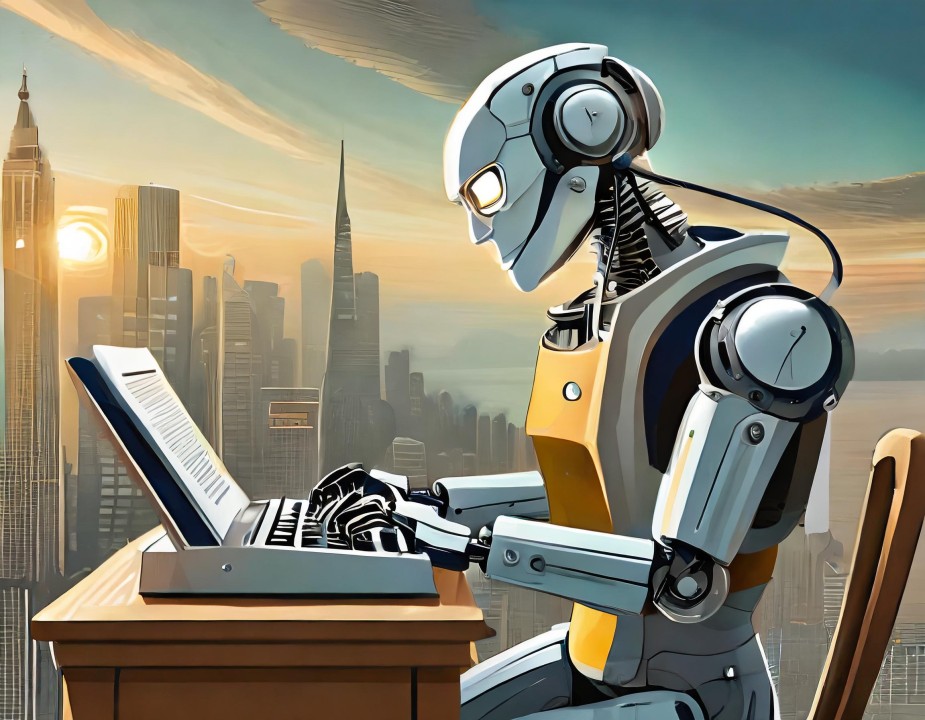
Artificial Intelligence (AI) has been a buzzword thrown around so frequently in 2023 that it's beginning to feel like an overused cliché. It seems that every new product release is now adorned with the letters "AI" simply to appear current and trendy.
In reality, AI has been around for a while and has already been providing benefits in many areas of our lives.
For example, remember all the stories about antibiotic-resistant bacteria? For years now we’ve been warned that eventually bacteria will evolve and because we tend to insist on taking drugs for common colds, when something comes along that we really need drugs for, they won’t work.
Well, MIT researchers used AI to discover a drug called halicin that can kill many strains of bacteria, even the resistant ones.
Also, you probably use AI every single day yourself and don’t realize it. For example, Google Maps uses AI constantly to find the best route to wherever you’re going, taking into account roadworks, weather and the speed of traffic ahead. The positive knock-on effects here are huge, including better traffic management, less fuel use and therefore cleaner air.
Yet, these headlines just don’t cut it in today's reactive environment, as opposed to embracing positive news, people are drawn to doomscrolling and immersing themselves in negative content.
It’s not surprising. To grab people's attention, the media must have a compelling narrative. Humans are wired for stories. Our brains crave the structure and emotional engagement that narratives provide. A compelling narrative triggers curiosity, empathy, and anticipation, drawing us in and making us invested in the outcome. But good news doesn’t sell newspapers or attract clicks, there needs to be a disaster, and AI comes with the potential for lots and lots of those.
The obvious target for any new technology is, of course, jobs and the concern that it could eventually lead to thousands of losses.

This time it’s different though. The types of jobs usually lost to new technology are the mundane, manual task-related processes. Robots took over the manufacture of cars, chat bots are chipping away at call-centers and much of the manufacture of food has been replaced with machinery.
However, AI now wants the artists and the writers, it’s after the creatives and those that have spent years at university studying graphic design. Luckily, it’s not very good. Yet.
And of course, if you really want to sell to the masses, you must talk about Armageddon, and seeing as we've all watched Terminator, we know that eventually AI will take over the world because it realizes that us flesh bags have been doing a terrible job of running it.
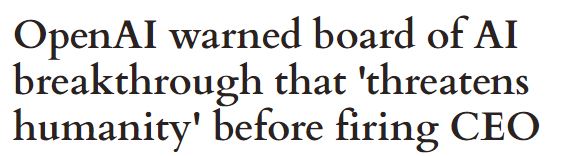
So is AI really going to annihilate the world in a raging hellfire, or will it forever be destined to draw royalty-free images to pad out poorly researched marketing articles?
What is AI?
I urge you to listen to "The Infinite Monkey Cage" podcast. All of them, but in particular the one about AI, it has a lot of insights into what AI is and what it isn't. An answer given to the question "what is AI?" was "A poor choice of words in the 1950s", and that hits the nail on the head.
Currently, the most important thing to remember about AI is that it really isn't artificial or intelligent in the way we would normally measure such things. It just gives the impression of being both of these.
AI systems have access to a vast amount of data which it is able to process, at scale, and convert it into patterns. It finds regularities in data, analyses structure and maps them to processes and other data.
If you were to ask someone to complete the sequence “A, B, C”, they would (hopefully) say “D, E, F”.
Take that and multiply it by all the data in the world and you can probably get some idea of what is possible with these models.
That’s a simplified view of the sophisticated algorithms powering AI. Let's be clear: the work behind them is nothing short of remarkable. Yet, it's vital to remember that AI remains a powerful tool, not a sentient being. It doesn't think, remember, or understand in the traditional sense.
Let me give you an example from the programming world. If you wanted to use a bit of PHP to show you a random number, you could use something like this:
echo(rand());
Do you get a random number?
Nope.
Computers can’t do “random”. They can’t think about it, they must base it on something, so they use something called a “pseudo random number generator”. In short, it’s a whole bunch of numbers in a sequence and based on environmental factors, CPU clock rate and a lot of other stuff and it chooses one of those numbers. It looks random, but it’s not. We’ve been fooled all these years.
The Turing Test
Let’s get back to AI then, the de facto father of AI, Alan Turing and “The Turing Test.”
He proposed the test as a practical method to assess a machine’s ability to exhibit intelligent behavior, although he also acknowledged that passing the test doesn’t equate to “thinking” like a human does. In fact, he noted that there was potential for mimicking without understanding, which might seem like thinking, but it’s really not.
In June 2012, the chatbot “Eugene Goostman” (apparently) beat the test, the first such artificial intelligence to do so, but there’s a problem here. The Turing Test itself is simple. It’s the test of whether a human, or a number of humans, can tell whether they’re talking to a computer or another human.
If humans can’t tell whether they’re talking to a computer or not, then the chatbot is seen to have passed the test. However, humans hunt for the Loch Ness Monster and buy Coldplay albums; we’re not to be trusted. In reality, any sufficiently complex computer could pass the test and still not understand what it’s doing, saying or drawing. It’s simply pandering to human input and giving us what we want to hear based on a vast database of previous texts and conversations.
It can’t “think”.
So is AI here for our jobs?
While the fear of job losses often surfaces with every technological breakthrough, the reality is likely more nuanced. Instead of disappearing entirely, jobs often undergo a transformation, evolving into new forms or shifting across sectors. As new jobs are lost, others are created.
Take the Industrial Revolution. While it replaced manual labour with machines, it also gave rise to new jobs in factory operation, maintenance, and management. Similarly, the rise of automation might displace routine tasks in certain industries, but it will also create demand for jobs in areas like data analysis, AI development, and cybersecurity.
For example, a quick search on LinkedIn for “AI” in the job section gives these results:

That’s over 5,000 jobs with AI mentioned somewhere in them, and that number’s going up all the time.
Should we be worried?
There are a number of ways AI could eventually be our downfall, whether it’s because it takes out jobs, or decides to wipe us out with nuclear Armageddon, but I prefer to take a more positive view on these things.
Personally, I think that AI will help us to overcome many of the issues that we are currently struggling with. For example, due to the huge datasets it can process at phenomenal speed, it’s likely it will be able to find new formulas for eco-friendly synthetic fuels, create better drugs and develop nutritious foods.
There will be some who will strive to find other uses for it that aren’t quite so altruistic, but again, that’s humans for you.
For the last word, I thought I’d ask ChatGPT the ultimate question:
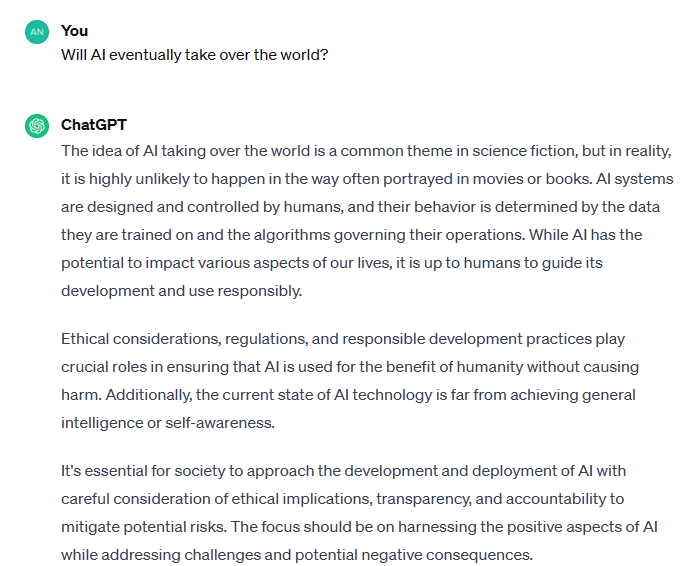
So really, it’s down to humans again.
We’re doomed.