
Generation X and AI:
From Displacement to Opportunity
The complete guide for experienced professionals navigating career transformation in the age of artificial intelligence
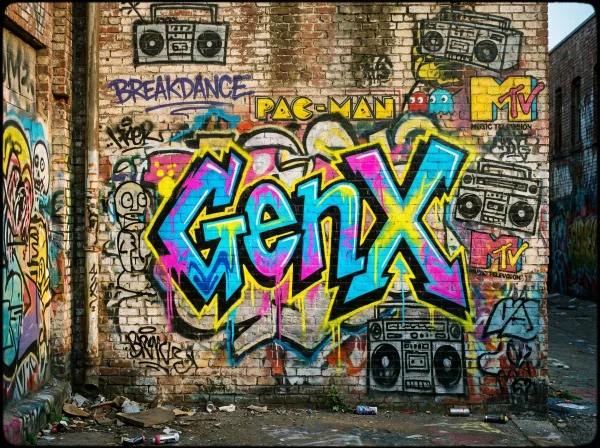
The Generation Caught in the Middle
You've probably felt it. That creeping sense that the rules changed whilst you weren't looking. One day you're the experienced professional everyone turns to, the next you're reading job specs that might as well be written in a different language. "AI-native mindset." "Digital transformation champion." "Prompt engineering expertise."
And you think: I've been working with technology since before these hiring managers were born. I learned DOS commands, survived the dotcom crash, adapted to cloud computing, mastered remote work during a pandemic. But somehow, that doesn't seem to count anymore.
If you're between 44 and 59 years old right now, you're Generation X. Born between 1965 and 1980, you're part of a cohort that's roughly 40 million strong in the US alone, over 13 million in the UK. You grew up with analogue childhoods and digital careers. You learned to type on actual typewriters before moving to word processors, then computers, then laptops, then tablets. You've adapted to more technological shifts than any generation before you.
And yet here we are, facing perhaps the biggest shift of all, and suddenly the narrative is that you're the ones who can't keep up.
That's not just frustrating. It's factually wrong. But I'm getting ahead of myself.
The thing about Generation X is that you've always been caught in the middle. Sandwiched between the Boomers who won't retire and the Millennials who are "digital natives" (whatever that actually means). You've spent your entire career being overlooked, underestimated, and told to wait your turn. And now, just as you're hitting your professional peak, along comes AI to supposedly make all that experience obsolete.
Except it doesn't. Not really. But we'll get to that.
First, let's talk about what's actually happening, because the statistics are both alarming and, I think, somewhat misleading.
The GenX Reality: By the Numbers

The 50+ Pivot: How Gen X is Reclaiming the Narrative in an AI Driven Job Market

The AI Skills Gap or Just a Birth Year? Why Gen X is Getting Filtered Out by Recruitment Tech

Gen X Sleep Problems: Why You Can’t Rest and How to Fix It

Going Local: Why Birmingham Might Be the Smartest Career Move You Haven’t Considered
How AI is Reshaping the GenX Career Landscape
Yes, AI is changing work. Yes, some jobs are being automated. Yes, there's a skills gap. But the story isn't "AI is coming for GenX jobs." The story is more like "AI is exposing the fact that companies have been underinvesting in their most experienced workers for years, and now everyone's scrambling."
Let me explain what I mean.
When you look at the data on AI displacement, it's not evenly distributed. The jobs most at risk are those involving routine cognitive tasks, data entry, basic analysis, simple content creation. These are tasks that, frankly, many GenX professionals stopped doing years ago because you've moved into more strategic, complex roles. The problem is that companies are using AI as an excuse to restructure, and in that restructuring, they're often making the catastrophic mistake of letting go of experienced workers whilst keeping cheaper, younger employees who they think can "learn AI faster."
This is backwards, but it's happening. And it's happening because of a fundamental misunderstanding about what AI actually does and what human expertise actually means.
AI is brilliant at pattern recognition, data processing, generating content based on existing patterns. It's terrible at understanding context, making judgement calls in ambiguous situations, reading between the lines, understanding what clients actually mean versus what they say, navigating office politics, mentoring junior staff, and about a thousand other things that you do without even thinking about it because you've been doing them for 20 or 30 years.
The industries seeing the most disruption right now are interesting. Finance and accounting, yes, but mostly in the routine transaction processing areas. Marketing and advertising, absolutely, but primarily in the content production and media buying spaces. Customer service, definitely, though mostly in the first-line support roles. Administrative functions, certainly. Middle management, perhaps surprisingly, quite a lot.
But here's what's not being automated: strategic decision-making, complex problem-solving, crisis management, relationship building, ethical judgement, innovation that requires understanding of historical context, mentorship, and leadership that requires emotional intelligence.
In other words, the things you're actually good at.
The skills gap is real, though. And it's not just about knowing how to use ChatGPT. It's about understanding how AI fits into workflows, how to evaluate its outputs, how to use it as a tool rather than a replacement, how to combine your expertise with AI capabilities to produce better results than either could alone.
And this is where the age discrimination piece becomes particularly insidious. Because companies are assuming that younger workers will naturally be better at this, when in reality, the opposite is often true. Younger workers might be more comfortable with technology in general, but they lack the domain expertise to know when AI is producing nonsense. They don't have the pattern recognition that comes from having seen three economic cycles, four technology revolutions, and countless industry trends come and go.
You know what's actually valuable in the AI era? Experience. Context. Judgement. The ability to say "I've seen this before, and here's what happened." The ability to spot when something that looks good on paper won't work in reality. The ability to understand not just what the data says, but what it means.
But you need to be able to speak the language. You need to understand the tools. You need to be able to demonstrate that you're not just experienced, you're experienced and AI-capable.
And that's entirely achievable. More than achievable, actually. It's probably easier for you than it is for someone just starting out, because you have the context to understand what matters and what doesn't.
Industries Facing AI Transformation
Data represents percentage of roles experiencing significant AI-driven transformation
Your Experience is Your Superpower
I want to be very clear about something, because I think it gets lost in all the anxiety and hand-wringing about AI: your experience is not becoming obsolete. It's becoming more valuable. But only if you can demonstrate it in ways that matter in the current market.
Think about what you actually do in your job. Not your job title, but what you actually do. If you're in marketing, you don't just "do marketing." You understand consumer psychology, you know how to read market signals, you can predict how campaigns will perform based on having seen hundreds of them, you know which metrics actually matter and which are vanity numbers, you understand brand positioning, you can navigate client relationships, you know how to manage budgets and timelines and teams.
If you're in finance, you don't just "do accounting." You understand business cycles, you can spot financial irregularities, you know how to interpret numbers in context, you understand regulatory requirements, you can explain complex financial concepts to non-financial people, you know how to build relationships with auditors and regulators, you understand risk in ways that go beyond what any model can capture.
If you're in HR, you don't just "do HR." You understand people, you can read situations, you know how to navigate difficult conversations, you understand the difference between what people say and what they mean, you can spot potential problems before they become actual problems, you know how to build culture, you understand the legal landscape, you can mediate conflicts.
None of this is going away. In fact, all of it becomes more important when you add AI into the mix, because AI can help you do these things better, faster, more efficiently, but it can't do them for you.
The skills that AI genuinely can't replicate are, perhaps not coincidentally, the skills that you've spent decades developing. Emotional intelligence. The ability to read a room. Understanding context and nuance. Making judgement calls when there's no clear right answer. Building trust. Managing relationships. Thinking strategically rather than just tactically. Understanding the second and third-order effects of decisions. Knowing when to follow the process and when to break it.
These are human skills. They're also expert skills. They're the skills that come from having done something for long enough that you've internalised the patterns, you've seen the exceptions, you've learned what works and what doesn't through trial and error rather than through reading about it.
And here's the thing that I think is genuinely exciting: when you combine these skills with AI capabilities, you become extraordinarily powerful. You can use AI to handle the routine stuff, the data processing, the initial analysis, the first draft of the content, whilst you focus on the strategic thinking, the relationship building, the judgement calls, the creative problem-solving.
A marketing professional with 25 years of experience who knows how to use AI tools isn't competing with AI. They're competing with other marketing professionals, and they're winning because they can work faster, produce more, analyse better, whilst still bringing all that experience and judgement to bear.
A finance professional who understands both accounting principles and AI capabilities isn't being replaced by automation. They're becoming more valuable because they can do in hours what used to take weeks, whilst still applying the critical thinking and contextual understanding that prevents costly mistakes.
An HR professional who can use AI for initial candidate screening but knows how to actually assess cultural fit and potential isn't losing their job to algorithms. They're becoming more effective because they can focus their time on the high-value interactions whilst letting AI handle the administrative burden.
But, and this is important, you need to be able to demonstrate this. You need to be able to speak the language. You need to understand the tools well enough to use them effectively. You need to be able to show that you're not just experienced, you're experienced and AI-capable.
And that's what this guide is about. Not just understanding AI, but understanding how to position yourself, how to acquire the skills that matter, how to demonstrate your value in ways that resonate with current market demands, and how to navigate a career transition if that's what you need to do.
Your AI Readiness Report
This short questionnaire takes around 90 seconds. There are no right or wrong answers — just honest ones. At the end, you'll receive a personalised report with practical guidance tailored to exactly where you are right now.
Almost done — your report is ready to generate
Enter your email below and we'll deliver your personalised AI readiness report instantly. No spam. Unsubscribe any time.
We respect your privacy. No spam, ever. Unsubscribe any time. All answers are securely stored and if you want them deleted, just email [email protected].
Your personalised report is being generated…
Please don't close this tab — your report is on its way
Your AI Readiness Report
Based on your answers, here's where you stand — and what to do next.
Explore your recommended resources
The Three-Pillar Framework for AI-Era Career Success
After speaking with dozens of GenX professionals navigating this transition, I've identified three core pillars that determine success. It's not about doing everything at once. It's about understanding where you are, where you want to be, and taking deliberate steps to get there.
The framework is straightforward, though the execution requires commitment. Think of it as a roadmap rather than a checklist. You'll move through these pillars at your own pace, and you might find yourself working on all three simultaneously at different levels.
Pillar One: Understand Your Value
This sounds obvious, but it's where most people get stuck. You know you're valuable. You know you have experience and expertise. But can you articulate it in ways that resonate with current market demands? Can you explain your value in the context of AI transformation?
This isn't about writing a better CV, though that might be part of it. It's about genuinely understanding what you bring to the table that AI can't replicate, and then being able to demonstrate it. It's about identifying your transferable skills, understanding how they apply in an AI-augmented workplace, and positioning yourself accordingly.
For some people, this means reframing their experience. A project manager with 20 years of experience isn't just someone who knows how to use Microsoft Project. They're someone who understands stakeholder management, risk mitigation, resource allocation under constraints, team dynamics, and how to deliver results when everything's going wrong. Those skills don't become less valuable with AI. They become more valuable, because AI can handle the scheduling and tracking whilst you focus on the human elements.
For others, it means identifying gaps. Perhaps you've been in the same role for 15 years and you've become very good at a specific set of tasks, but those tasks are now being automated. That doesn't mean your experience is worthless. It means you need to identify what aspects of your experience are transferable and what new skills you need to acquire to apply that experience in different contexts.
We've created a comprehensive guide to understanding and articulating your value as an experienced professional. It covers how to identify your unique strengths, how to position yourself in the market, how to build your personal brand, and how to demonstrate your value in concrete terms. You can find that guide here: Understanding Your Value as GenX Talent.
Pillar Two: Acquire AI Skills
This is where people often panic, and I want to address that directly. You don't need to become a data scientist. You don't need to learn Python (unless you want to). You don't need to understand the mathematics behind neural networks. You need to become AI-literate in your domain.
What does that mean? It means understanding what AI can and can't do in your field. It means knowing which tools are relevant to your work. It means being able to use those tools effectively. It means understanding how to evaluate AI outputs. It means knowing when to trust AI and when to override it. It means being able to integrate AI into your workflows in ways that make you more effective rather than just different.
For a marketing professional, AI literacy might mean knowing how to use AI for content generation, data analysis, customer segmentation, and campaign optimization, whilst understanding the limitations and knowing when human judgement is required.
For a finance professional, it might mean understanding how AI can be used for forecasting, anomaly detection, and process automation, whilst knowing how to validate outputs and apply contextual understanding.
For an HR professional, it might mean using AI for candidate screening, employee engagement analysis, and workforce planning, whilst maintaining the human touch in actual interactions and decision-making.
The specific skills you need depend on your role and industry, but the principle is the same: you need to be comfortable enough with AI tools to use them effectively, and knowledgeable enough to understand their limitations.
The good news is that this is entirely achievable. AI literacy for professionals isn't about technical expertise. It's about practical application. And you're probably better positioned to learn this than you think, because you have the domain knowledge to understand what matters and what doesn't.
We've put together a detailed guide on the essential AI skills for GenX professionals, broken down by industry and role. It includes specific tools to learn, how to learn them, and how to demonstrate your competency. You can find that here: Essential AI Skills for GenX Professionals.
Pillar Three: Transform Your Career
This is where everything comes together. Once you understand your value and you've acquired relevant AI skills, you need to actually do something with that. For some people, that means staying in their current role but repositioning themselves as AI-capable. For others, it means moving to a different role within their organization. For others still, it means changing companies or even changing careers entirely.
Career transformation doesn't necessarily mean starting over. It means applying your experience in new contexts, often in ways that are more valuable than what you were doing before. It means being strategic about your next move rather than just reactive to market changes.
This might involve updating your professional presence, networking in new circles, learning how to interview effectively when you're "overqualified," negotiating from a position of strength, or navigating the job search process as an experienced professional in a youth-obsessed market.
It might also involve considering alternative work arrangements. Fractional work, consulting, portfolio careers, these are all increasingly viable options for experienced professionals, and they often provide more flexibility and potentially higher earnings than traditional employment.
The key is having a plan. Understanding where you want to go, what you need to get there, and taking deliberate steps rather than just hoping things work out.
We've created comprehensive resources on career transition for GenX professionals, including step-by-step guides, templates, and real examples from people who've successfully navigated this transition. You can find those here: Career Transformation Resources.
Your Three-Pillar Roadmap
Understand Your Value
Identify your unique strengths, transferable skills, and how your experience translates to AI-era demands. Position yourself as experienced AND AI-capable.
✓ Personal brand development
✓ Value proposition refinement
✓ Market positioning strategy
Acquire AI Skills
Become AI-literate in your domain. Learn the tools, understand the capabilities, and integrate AI into your workflows effectively.
✓ Industry-specific tools
✓ Practical application
✓ Certification pathways
Transform Your Career
Apply your enhanced capabilities strategically. Navigate transitions, negotiate effectively, and position yourself for long-term success.
✓ Job search strategy
✓ Interview preparation
✓ Negotiation tactics
Real People, Real Transformations
I want to share some stories with you, because I think they illustrate what's actually possible better than any amount of theory. These are real people (names changed for privacy) who've successfully navigated the transition from "experienced professional worried about AI" to "experienced professional thriving because of AI."
Sarah's Story: From Marketing Director to AI-Powered Marketing Strategist
Sarah was 52 when her company announced a restructuring. She'd been Marketing Director for eight years, and before that she'd spent 17 years working her way up through various marketing roles. She was good at her job. Really good. Her campaigns consistently outperformed targets, she had strong relationships with clients, and her team respected her.
But the restructuring was framed around "digital transformation" and "AI-first marketing," and Sarah could see the writing on the wall. The new CMO was 15 years younger, talked constantly about "growth hacking" and "AI-native strategies," and seemed to view Sarah's experience as a liability rather than an asset.
Sarah could have fought it. She could have tried to prove she was still relevant. Instead, she took redundancy and spent six months deliberately upskilling. She took courses in AI marketing tools, learned how to use ChatGPT effectively for content strategy, got certified in marketing analytics platforms, and most importantly, she figured out how to articulate her value in the new landscape.
She didn't try to compete with 25-year-olds on their terms. She positioned herself as someone who understood both traditional marketing principles and modern AI tools. Someone who could develop strategy, not just execute tactics. Someone who understood consumer psychology, brand building, and long-term value creation, and who could use AI to do it better.
Within three months of starting her job search, she had multiple offers. She's now working as a freelance marketing strategist, earning 40% more than she did in her director role, working with multiple clients, and genuinely enjoying the work more because she's focused on strategy and client relationships whilst AI handles the routine execution.
The key insight from Sarah's story isn't that she learned AI tools. It's that she understood how to combine her 25 years of marketing experience with AI capabilities in ways that made her more valuable, not less.
Michael's Story: From Finance Manager to Data Analytics Consultant
Michael's situation was different. He was 48, had been a Finance Manager for 12 years, and was genuinely worried that automation was going to eliminate his role. He'd seen the software demos. He knew that AI could do in minutes what used to take his team days. He could see that the routine parts of his job were going to disappear.
But Michael made a crucial decision. Instead of trying to protect his existing role, he decided to pivot into the space where finance and data analytics intersect. He already understood financial principles, regulatory requirements, and business context. He just needed to add data science skills.
He spent a year doing this whilst still in his role. He took evening courses in data analytics, learned Python and SQL, got certified in business intelligence tools, and started applying these skills to his current work. He began producing insights that went beyond traditional financial reporting, identifying patterns and opportunities that the standard reports missed.
When his company eventually did restructure, Michael wasn't made redundant. He was moved into a newly created role as Data Analytics Consultant, with a 25% pay rise. His job now is to help different departments understand their data, build predictive models, and make data-driven decisions. He's using AI tools extensively, but his value comes from understanding what questions to ask, how to interpret the results, and how to communicate insights to non-technical stakeholders.
Michael's story illustrates that sometimes the best response to disruption isn't to resist it, but to position yourself at the intersection of your existing expertise and the new capabilities.
Jennifer's Story: From HR Professional to People Analytics Specialist
Jennifer was 55 and had spent her entire career in HR. She'd seen a lot of changes over the years, but the AI transformation felt different. She was watching HR tech companies automate everything from recruitment to performance management, and she was worried that her role was becoming obsolete.
What Jennifer realized, though, was that whilst AI could handle the administrative aspects of HR, it couldn't handle the human aspects. And increasingly, companies needed people who could do both. They needed people who understood HR principles and could also work with data, analytics, and AI tools.
Jennifer spent six months deliberately building these skills. She learned how to use HR analytics platforms, got certified in people analytics, started using AI tools for candidate screening and employee engagement analysis, and most importantly, she learned how to translate data insights into actionable HR strategies.
She didn't leave her company. Instead, she proposed a new role: People Analytics Specialist. Her pitch was simple: the company was investing heavily in HR tech, but they didn't have anyone who could bridge the gap between the technology and the actual people management. They needed someone who understood both the data and the human context.
They created the role for her, with a promotion and a significant pay rise. She now works with AI tools daily, but her value comes from her ability to interpret the data in context, to understand what the numbers actually mean for the organization, and to develop strategies that combine data-driven insights with human understanding.
Jennifer's story shows that sometimes the best career move isn't to change companies or even change roles dramatically. It's to evolve your current role in ways that make you indispensable.
You can read more detailed case studies and success stories from GenX professionals who've successfully navigated this transition here: GenX Success Stories.
Getting Started: Your First Steps
Right, so you've read this far, you understand the landscape, you can see that this is both challenging and achievable. The question now is: what do you actually do?
I'm going to give you a practical, step-by-step approach to getting started. This isn't the only way to do it, but it's a framework that's worked for hundreds of people I've worked with. You can adapt it to your situation, but the principle is the same: start with assessment, then build a plan, then take action.
Step One: Assess Your Current Position
Before you do anything else, you need to understand where you actually are. Not where you think you are, not where you wish you were, but where you actually are right now. This means being honest about your skills, your knowledge, your market position, and your career goals.
Take the AI Readiness Assessment at the top of this page if you haven't already. It'll give you a baseline understanding of where you stand across four key dimensions: AI awareness, technical comfort, career position, and learning readiness.
But beyond that, do a proper skills inventory. Write down everything you're good at. Not just the technical skills, but the soft skills, the domain knowledge, the relationships, the experience. Then look at each item and ask yourself: Is this still valuable in an AI-augmented workplace? How does this translate to current market demands? What evidence do I have that I'm good at this?
Be brutal about this. If you've been doing the same thing for 15 years and you can't articulate why that experience is valuable beyond "I've been doing it for 15 years," that's a problem you need to address.
Also, assess your vulnerability. Is your current role at risk? Are the core tasks you perform being automated? Is your company investing in AI in ways that might affect your position? You need to know this, because it affects your timeline and your strategy.
Step Two: Identify Your Path
Once you know where you are, you need to decide where you want to go. This isn't about having a perfect plan. It's about having a direction.
Do you want to stay in your current role but become more AI-capable? Do you want to move to a different role within your organization? Do you want to change companies? Do you want to change careers entirely? Do you want to move into consulting or fractional work?
There's no right answer here. The right answer is the one that aligns with your goals, your circumstances, and your preferences. But you need to make a decision, because different paths require different strategies.
If you're staying in your current role, your focus is on upskilling and repositioning yourself within your organization. If you're changing roles or companies, you need to think about how to position yourself in the job market. If you're changing careers, you need a more comprehensive transition plan.
Think about your timeline too. Are you in immediate danger of redundancy? Then you need to move quickly. Are you secure for now but want to future-proof? Then you can take a more measured approach. Are you planning to work for another 10-15 years? Then you need to think about long-term positioning, not just immediate survival.
Step Three: Begin Learning
Once you have a direction, start learning. But be strategic about this. Don't just sign up for random courses because they sound interesting. Focus on the skills that are actually relevant to your path.
If you're in marketing, focus on AI marketing tools and marketing analytics. If you're in finance, focus on financial modeling and data analysis. If you're in HR, focus on people analytics and HR tech. Learn the tools that are actually used in your industry, not generic AI courses that might be interesting but won't help you in your specific role.
Start with the basics. You need to understand what AI is, what it can do, what it can't do, and how it's being applied in your field. Then move to practical application. Learn specific tools. Practice using them. Apply them to real problems.
Don't try to learn everything at once. Pick one or two key skills and focus on those until you're genuinely competent. Then move to the next ones. It's better to be really good at a few relevant things than mediocre at many things.
And document your learning. Keep a portfolio of projects you've done, problems you've solved, results you've achieved. You'll need this evidence when you're positioning yourself in the market.
We have comprehensive guides on what to learn, how to learn it, and where to find the best resources here: Essential AI Skills for GenX Professionals and Training and Education Programs.
Step Four: Build Your Network
Whilst you're learning, start building your network in the AI space. This doesn't mean abandoning your existing network. It means expanding it to include people who are working at the intersection of your domain and AI.
Join relevant LinkedIn groups. Participate in online communities. Attend webinars and virtual conferences. Start engaging with content about AI in your industry. Share your own learning journey. Connect with people who are doing what you want to be doing.
This serves multiple purposes. It keeps you informed about what's actually happening in your field. It gives you access to opportunities that might not be publicly advertised. It helps you understand how to talk about AI in ways that resonate with your industry. And it positions you as someone who's engaged and learning, not someone who's being left behind.
Update your LinkedIn profile to reflect your AI learning. Not in a desperate "please hire me" way, but in a confident "I'm developing these capabilities" way. Share insights from your learning. Comment on industry developments. Position yourself as someone who's actively engaged with the transformation, not someone who's resisting it.
Step Five: Take Action
At some point, you need to stop preparing and start doing. This might mean applying for new roles. It might mean proposing a new position within your current company. It might mean starting to take on freelance projects. It might mean having a conversation with your manager about how your role could evolve.
The specific action depends on your path, but the principle is the same: you need to move from learning to applying. You need to put yourself out there. You need to take risks.
This is often the hardest part, particularly if you've been in the same role or company for a long time. It's scary to put yourself in the market. It's uncomfortable to position yourself as someone who's still learning. It's vulnerable to admit that you're adapting rather than already being an expert.
But here's the thing: everyone's adapting right now. Everyone's learning. The difference between people who succeed and people who don't isn't that the successful ones already knew everything. It's that they were willing to be uncomfortable, to take risks, to put themselves out there before they felt completely ready.
You don't need to be perfect. You need to be good enough and willing to learn. You need to be able to demonstrate that you're capable, adaptable, and valuable. And then you need to actually go and demonstrate it.
Your Action Checklist: First 30 Days
Complete Your Assessment
Take the AI Readiness Assessment and conduct a thorough skills inventory. Be honest about where you are.
Choose Your Direction
Decide whether you're staying, moving, or pivoting. Set a clear direction even if the details aren't perfect.
Start Learning (One Thing)
Pick ONE AI tool relevant to your role and commit to mastering it. Don't try to learn everything at once.
Update Your Profile
Refresh your LinkedIn to reflect your AI learning journey. Start engaging with relevant content in your industry.
Take One Action
Apply for one role, have one conversation, start one project. Do something that moves you forward, not just prepares you.
Remember: Progress over perfection. Start where you are, use what you have, do what you can.
Everything You Need to Succeed
I've put together a comprehensive set of resources to support you through this journey. These aren't just theoretical guides. They're practical, actionable resources based on what's actually worked for hundreds of GenX professionals navigating this transition.
For Understanding Your Value:
If you're struggling to articulate what makes you valuable in the AI era, or if you're not sure how to position your experience in current market terms, start with our guide on GenX talent. It covers how to identify your unique strengths, how to translate your experience into current market language, how to build your personal brand, and how to demonstrate your value in concrete terms.
Explore GenX Talent ResourcesFor Acquiring AI Skills:
If you're not sure what AI skills you actually need, or where to start learning, or how to prioritize your learning, we've created a comprehensive guide to essential AI skills for GenX professionals. It's broken down by industry and role, with specific tools to learn, resources for learning them, and guidance on how to demonstrate competency.
Discover Essential AI SkillsFor Training and Education:
If you're ready to commit to formal training but you're not sure which programs are worth it, or how to choose between different options, or how to fit learning into a busy schedule, we've reviewed dozens of training programs and created detailed guides on what works for adult learners.
Browse Training ProgramsFor Career Transition:
If you're considering a career change, or you're being forced into one, or you're just not sure what your next move should be, we've created step-by-step guides for navigating career transitions as an experienced professional. This includes everything from assessing your options to executing your transition successfully.
Navigate Career TransitionFor Understanding AI's Impact:
If you want to understand the data behind AI displacement, which industries and roles are most affected, and what the future looks like, we've compiled comprehensive research and analysis on AI's impact on the GenX workforce.
Understand AI DisplacementFor Inspiration and Practical Lessons:
If you want to see what's actually possible, and learn from people who've successfully made this transition, we've collected detailed success stories from GenX professionals across different industries and roles.
Read Success StoriesThe Data Behind the Strategy
I want to be clear about something: this isn't just motivational content. This is based on actual data, real research, and proven strategies. The recommendations in this guide come from analyzing what's actually working for GenX professionals in the current market.
The statistics I've cited throughout this guide come from multiple sources: industry reports, academic research, surveys of GenX professionals, and analysis of job market trends. I'm not making this up to make you feel better. I'm telling you what the data actually shows.
What the data shows is that GenX professionals who invest in AI literacy and who can articulate their value in current market terms are not just surviving this transition, they're thriving. They're getting better roles, higher salaries, more flexibility, and more job satisfaction than they had before.
The data also shows that the companies that are successfully navigating AI transformation are the ones that are investing in their experienced workers, not replacing them. They're the ones that understand that AI is a tool that makes experienced professionals more valuable, not less.
But the data also shows that this doesn't happen automatically. It requires deliberate action. It requires learning. It requires adaptation. It requires being willing to be uncomfortable and to take risks.
The good news is that you're probably better positioned to do this than you think. The skills that make you valuable, the experience you've accumulated, the adaptability you've demonstrated throughout your career, these are all assets in this transition. You just need to leverage them effectively.
Your Questions Answered
I've worked with enough GenX professionals to know what questions you're probably asking right now. Let me address the most common ones directly.
"Am I too old to learn AI?"
No. Absolutely not. AI literacy for professionals isn't about technical expertise. It's about practical application. You're learning how to use tools, not how to build them. And you're probably better at learning practical applications than you think, because you have the context to understand what matters and what doesn't. The average time to achieve basic AI literacy is 30-60 days of focused learning. Professional-level competency typically takes 3-6 months. That's entirely achievable.
"What if I'm not technical?"
You don't need to be. Most AI tools for professionals are designed to be user-friendly. You're not learning to code (unless you want to). You're learning to use tools that are designed for business users. If you can use Excel, you can learn to use AI tools. The learning curve is similar.
"How long does this actually take?"
It depends on where you're starting and where you want to go, but here's a realistic timeline: Basic AI literacy can be achieved in 1-2 months of part-time learning. Professional competency in specific tools takes 3-6 months. Career transition, if that's what you're doing, typically takes 6-12 months from decision to new role. But you can start seeing results much sooner. Most people report feeling more confident and capable within the first month of focused learning.
"Can I really compete with younger workers?"
You're not competing with younger workers. You're competing with other experienced professionals. And yes, you can absolutely compete effectively. In fact, you have advantages that younger workers don't have: domain expertise, contextual understanding, relationship skills, judgement developed through experience. The key is demonstrating that you also have AI capabilities. When you combine experience with AI literacy, you're not just competitive, you're often the preferred candidate.
"What if my company doesn't support this?"
Then you need to take ownership of your own development. Many of the most successful transitions I've seen have been people who invested in themselves rather than waiting for their company to invest in them. Yes, it would be better if companies supported this. But if they don't, that doesn't mean you can't do it. It just means you need to be more proactive.
"Is it worth changing careers at this stage?"
That depends entirely on your situation. For some people, staying in their current field but evolving their role is the right move. For others, a career change makes sense. The question isn't whether it's worth it in general. The question is whether it's worth it for you, given your goals, your circumstances, and your preferences. What I can tell you is that career changes at 45, 50, or 55 are increasingly common and increasingly successful. Age is less of a barrier than it used to be, particularly if you're bringing valuable experience and demonstrable AI capabilities.
"What industries are safest?"
There's no such thing as a completely safe industry. AI is affecting everything. But some sectors are more resilient than others. Healthcare, education, professional services, creative industries, and roles requiring high emotional intelligence or complex judgement are generally more resilient. But even within affected industries, there are roles that are growing. The key is positioning yourself in roles that combine human expertise with AI capabilities, rather than roles that are purely routine or purely technical.
"Should I get certified?"
Certifications can be valuable, but they're not essential. What matters more is demonstrable competency. Can you actually use the tools? Can you show results? Can you articulate how you've applied AI in your work? That said, certifications can be useful for getting past initial screening, particularly if you're changing roles or companies. The most valuable certifications are industry-specific ones that are recognized by employers in your field.
"What if I've been out of work for a while?"
That makes things more challenging, but it's not insurmountable. The key is using that time productively. If you're currently unemployed, treat upskilling as your full-time job. Learn intensively. Build a portfolio of projects. Network actively. Volunteer or freelance to get recent experience. When you're back in the market, you can position the gap as a deliberate investment in your capabilities rather than just unemployment.
"How do I explain this to recruiters who don't understand?"
You need to speak their language. Don't talk about your learning journey or your personal growth. Talk about capabilities and results. "I've developed expertise in AI-powered marketing analytics, which I've applied to increase campaign ROI by 35%." "I've integrated AI tools into financial forecasting, reducing analysis time by 60% whilst improving accuracy." Focus on what you can do and what results you can deliver, not on the process of getting there.
"What's the ROI of investing in this?"
The data shows that GenX professionals with AI skills earn 25-40% more than those without, on average. They also report higher job satisfaction, more career opportunities, and greater job security. The typical investment in upskilling is £1,000-£3,000 for courses and certifications, plus 3-6 months of time. Most people recoup that investment within the first year through higher earnings or better opportunities. But beyond the financial ROI, there's also the psychological benefit of feeling capable and relevant rather than anxious and obsolete.
Start Your Transformation Today
Adapting to AI whilst dealing with age discrimination whilst navigating a rapidly changing job market whilst possibly managing redundancy or career transition, is genuinely challenging. It's stressful. It's uncomfortable. It requires effort and commitment and a willingness to be vulnerable.
But it's also entirely achievable. And it's necessary. Because the alternative, trying to ignore AI or hoping it goes away or just waiting to see what happens, that's not a strategy. That's just hoping for the best whilst preparing for the worst.
The good news is that you're not starting from scratch. You have decades of experience. You have skills that AI can't replicate. You have adaptability that you've demonstrated throughout your career. You have the capacity to learn this. You just need to actually do it.
And you don't have to do it alone. There's a growing community of GenX professionals navigating this transition. There are resources, guides, training programs, support systems. There are people who've successfully made this transition who can show you how they did it.
The question isn't whether you can do this. The question is whether you will.
So here's what I want you to do right now, before you close this page and go back to whatever you were doing before:
Take the AI Readiness Assessment. It takes 10 minutes. It'll give you a clear picture of where you are and what you need to focus on. That's your starting point.
Then, pick one thing. One skill to learn. One conversation to have. One action to take. Don't try to do everything at once. Just pick one thing and commit to doing it this week.
That's how this works. Not through grand plans and perfect strategies, but through consistent action. One step at a time. One skill at a time. One conversation at a time.
You've adapted to every other technological shift in your career. You can adapt to this one too. You just need to start.
Ready to Transform Your Career?
Join GenX professionals who are successfully navigating the AI era. Get exclusive resources, practical guidance, and community support.
Take the Assessment
Discover your AI readiness score and get personalized recommendations
Access Resources
Get comprehensive guides, templates, and training recommendations
Join the Community
Connect with peers, share experiences, and get support on your journey
No credit card required. Instant results. 100% free.
What Happens Next
Once you've taken the assessment and started your learning journey, here's what you can expect:
You'll probably feel overwhelmed at first. That's normal. There's a lot to learn, and it can feel like everyone else is already ahead of you. They're not. Everyone's learning. The difference is that some people started a bit earlier, that's all.
Within the first month, you'll start to feel more confident. You'll understand the basics. You'll be able to use at least one AI tool effectively. You'll start to see how this applies to your work. You'll probably have some "aha" moments where things click into place.
Within three months, you'll be genuinely competent. You'll be using AI tools regularly in your work. You'll be able to talk about AI in your industry with confidence. You'll start to see opportunities that you didn't see before. You'll probably start to feel excited rather than anxious.
Within six months, you'll be positioned differently in the market. Whether you're staying in your current role or moving to a new one, you'll be able to demonstrate AI capabilities alongside your experience. You'll be having different conversations. You'll be considered for different opportunities.
Within a year, you'll look back and wonder why you were so worried. Not because it was easy, but because you'll have proven to yourself that you can do this. You'll have adapted. You'll have grown. You'll be in a better position than you were before.
But none of that happens unless you start. So start. Take the assessment. Pick one thing to learn. Take one action. Do it today, not tomorrow.
Your experience isn't obsolete. Your career isn't over. You're not too old. You're not being left behind.
You're Generation X. You've adapted to every other change in your career. You can adapt to this one too.
Now go and prove it.
This guide is regularly updated with new research, resources, and success stories. Bookmark this page and check back regularly for the latest insights on navigating your career in the AI era.
Have questions or want to share your story? Get in touch - we'd love to hear from you.