
Generation X and AI Displacement: Data, Impact & Solutions
A data-driven analysis of which roles face genuine displacement risk, which are safe, and how to position yourself for long-term career security in the AI era
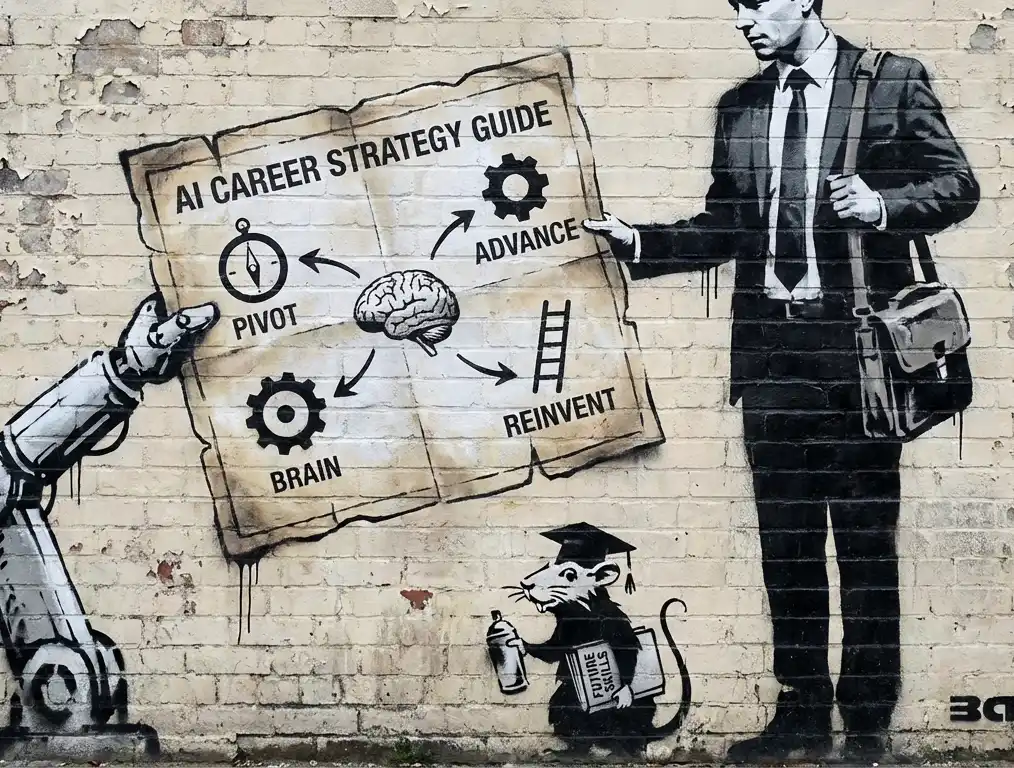
The Reality of AI Displacement: Separating Fear from Fact
The discourse around AI and job displacement oscillates between two extremes: apocalyptic predictions of mass unemployment and dismissive reassurances that nothing fundamental will change. Neither perspective serves Generation X professionals trying to make informed decisions about their careers. The reality is more nuanced, more gradual, and more manageable than either extreme suggests.
AI will displace certain roles and fundamentally transform others. This is not speculation—it's already happening. Customer service representatives are being replaced by AI chatbots. Junior analysts find their work automated by AI-powered data processing. Entry-level content writers compete with AI-generated copy. These displacements are real, measurable, and accelerating.
However, the pattern of displacement reveals important insights. AI is not replacing entire professions wholesale. It's automating specific tasks within roles, changing the nature of work rather than eliminating it entirely. The customer service representative who only answered routine questions faces displacement. The customer service professional who handles complex complaints, builds customer relationships, and identifies systemic issues remains valuable. The distinction matters enormously.
For experienced professionals, this pattern creates both risk and opportunity. Your decades of accumulated expertise, judgment, and relationship-building capabilities are precisely the elements AI cannot replicate. Your vulnerability lies not in your experience but in whether your current role emphasises automatable tasks or irreplaceable human capabilities. Understanding this distinction is the first step toward protecting your career.
The data from multiple sources—McKinsey Global Institute, Oxford Economics, World Economic Forum—converges on several key findings. First, displacement will be gradual rather than sudden. Most roles will transform over 5-10 years rather than disappearing overnight. Second, displacement risk correlates strongly with task composition rather than job titles. Two people with the same title may face vastly different risks based on what they actually do daily. Third, workers who proactively adapt face significantly better outcomes than those who wait for displacement to occur.
This analysis examines displacement risk through multiple lenses: which specific tasks face automation, which roles are most vulnerable, what timeline to expect, and most importantly, what actions you can take now to protect and enhance your career security. The goal is not to generate anxiety but to enable informed decision-making based on evidence rather than fear or wishful thinking.
Understanding these statistics requires nuance. When research indicates that 30% of work activities could be automated, this doesn't mean 30% of workers will lose their jobs. It means that across all jobs, roughly 30% of the tasks currently performed by humans could theoretically be automated with current or near-term AI capabilities. The actual impact depends on economic factors, implementation timelines, regulatory environments, and most importantly, how workers and organisations respond.
Comprehensive Displacement Risk Assessment
Determining your personal displacement risk requires examining multiple factors: the specific tasks you perform, the industry you work in, your organisation's AI adoption trajectory, and your current skill set. This assessment provides a framework for honest evaluation of your situation.
Task-Level Vulnerability Analysis
AI automation follows predictable patterns based on task characteristics. Tasks with certain attributes face high automation risk. Tasks with different attributes remain difficult or impossible to automate with current technology.
High-Risk Task Characteristics:
Tasks that are routine, repetitive, and rule-based face the highest automation risk. If your work follows predictable patterns, involves applying consistent rules to different inputs, or requires minimal judgment or creativity, AI can likely perform it more efficiently than humans.
Examples include data entry, basic document processing, routine customer inquiries, simple calculations, standard report generation, and repetitive administrative tasks. These tasks don't require human intelligence—they require consistent execution of defined processes. AI excels at exactly this type of work.
Tasks that involve processing structured information also face high risk. If your work primarily involves reading standardised documents, extracting specific data points, categorising information according to defined criteria, or generating outputs based on templates, AI systems can increasingly handle these functions.
Tasks requiring basic pattern recognition in well-defined domains face growing automation risk. This includes initial screening of CVs, basic fraud detection, simple image classification, routine quality control inspections, and preliminary data analysis. AI systems trained on large datasets can identify patterns more consistently than humans in these contexts.
Low-Risk Task Characteristics:
Tasks requiring complex judgment in ambiguous situations remain difficult to automate. If your work involves navigating situations with incomplete information, balancing competing priorities, making decisions with significant consequences, or applying judgment that considers context and nuance, you're performing work that AI cannot easily replicate.
Examples include strategic planning, complex negotiation, crisis management, ethical decision-making, and situations requiring consideration of unstated implications or long-term consequences. These tasks require not just intelligence but wisdom—accumulated experience that enables sound judgment in novel situations.
Tasks involving genuine creativity and innovation resist automation. If your work requires generating truly novel ideas, combining concepts in unexpected ways, creating original content that resonates emotionally, or solving problems that have never been encountered before, you're performing work that current AI cannot match.
Tasks centred on building and maintaining human relationships remain fundamentally human. If your work involves establishing trust, reading emotional cues, providing empathy and support, navigating complex interpersonal dynamics, or building long-term relationships, you're performing work that AI cannot replicate regardless of technical advancement.
Tasks requiring physical dexterity in unstructured environments also resist automation. If your work involves manipulating objects in varied contexts, navigating unpredictable physical spaces, or performing tasks that require fine motor control in changing conditions, current robotics technology cannot match human capability.
Assessment Exercise:
List the ten tasks you perform most frequently in your current role. For each task, honestly assess whether it exhibits high-risk or low-risk characteristics. Calculate the percentage of your time spent on high-risk versus low-risk tasks. This percentage provides a rough indicator of your displacement vulnerability.
If more than 70% of your time involves high-risk tasks, you face significant displacement risk within 3-5 years. If 30-70% of your time involves high-risk tasks, you face moderate risk requiring proactive adaptation. If less than 30% of your time involves high-risk tasks, you face low immediate risk but should still monitor developments and build AI literacy.
Industry-Specific Displacement Patterns
Displacement risk varies significantly across industries based on AI adoption rates, economic incentives for automation, regulatory constraints, and the nature of work performed. Understanding your industry's trajectory helps predict your personal timeline and urgency.
High-Displacement Industries:
Financial services faces aggressive AI adoption driven by clear ROI and competitive pressure. Routine analysis, basic customer service, simple trading operations, and standard compliance checking are rapidly automating. However, relationship management, complex advisory services, and strategic decision-making remain human-centred.
Customer service and support operations face substantial displacement as AI chatbots and virtual assistants handle routine inquiries. First-line support roles performing scripted interactions face highest risk. Escalation specialists handling complex issues, relationship managers, and those providing consultative support remain valuable.
Data entry and basic administrative roles face near-complete automation. If your role primarily involves transferring information between systems, processing routine paperwork, or performing standardised administrative tasks, displacement risk is immediate and severe.
Transportation and logistics face automation through autonomous vehicles and AI-powered routing systems. However, the timeline varies significantly by context. Long-haul trucking faces earlier automation than urban delivery. Warehouse operations automate faster than last-mile delivery requiring customer interaction.
Medium-Displacement Industries:
Healthcare faces selective automation. Diagnostic imaging analysis, routine patient monitoring, basic triage, and administrative tasks automate increasingly. However, direct patient care, complex diagnosis requiring holistic assessment, treatment planning, and relationship-based care remain fundamentally human.
Legal services see automation of document review, basic research, contract analysis, and routine filings. However, strategy development, negotiation, courtroom advocacy, and client advisory services remain human-centred. Junior associate work faces higher risk than partner-level work.
Marketing and advertising automate content generation, basic design, campaign optimisation, and performance analysis. However, strategic planning, brand development, creative direction, and relationship management remain human activities. Execution roles face higher risk than strategic roles.
Education faces selective automation of content delivery, basic assessment, and administrative tasks. However, mentoring, complex skill development, motivation, and relationship-based learning remain fundamentally human. Online education platforms automate certain functions whilst creating demand for different human roles.
Low-Displacement Industries:
Healthcare professions requiring direct patient interaction—nursing, physical therapy, counselling—face low displacement risk. AI augments these roles but cannot replace the human connection, empathy, and physical care they provide.
Skilled trades requiring physical work in unstructured environments—plumbing, electrical work, construction—face low near-term displacement risk. Current robotics cannot match human dexterity and problem-solving in varied physical contexts.
Creative professions requiring genuine innovation and emotional resonance—fine arts, music, literature, design—face low displacement risk. AI can generate content but struggles with true creativity and emotional depth that resonates with human audiences.
Leadership and management roles requiring judgment, relationship building, and strategic thinking face low displacement risk. AI can inform decisions but cannot replace human leadership, motivation, and organisational navigation.
Organisational Adoption Trajectory
Your organisation's approach to AI adoption significantly impacts your personal displacement timeline. Some organisations aggressively pursue automation. Others adopt cautiously. Understanding your organisation's trajectory helps you plan appropriately.
Indicators of Aggressive AI Adoption:
Organisations making significant AI investments, hiring AI specialists, partnering with AI vendors, or publicly discussing automation strategies signal aggressive adoption. If your organisation exhibits these characteristics, expect faster displacement of automatable roles.
Organisations facing intense competitive pressure or margin compression often pursue aggressive automation to reduce costs. If your industry faces disruption or your organisation struggles financially, automation becomes more attractive despite implementation challenges.
Technology companies and digital-native organisations typically adopt AI faster than traditional industries. If you work for a tech company or digitally-focused organisation, expect faster adoption than in traditional sectors.
Indicators of Cautious Adoption:
Organisations in heavily regulated industries—healthcare, finance, legal—often adopt AI cautiously due to compliance requirements and liability concerns. Regulatory constraints slow adoption even when technical capability exists.
Organisations with strong unions or employment protections typically adopt automation more gradually. Workforce agreements and political considerations slow displacement even when economically attractive.
Organisations with older leadership or traditional cultures often adopt new technologies slowly. If your organisation's leadership lacks technical sophistication or resists change, adoption will be gradual regardless of external pressure.
Assessment Questions:
Has your organisation announced AI initiatives or automation projects? Has it hired AI specialists or data scientists? Has it partnered with AI vendors or consultants? Has leadership discussed automation in company communications? Have you seen roles eliminated or restructured due to automation?
Affirmative answers to multiple questions suggest aggressive adoption requiring urgent response. Negative answers suggest more gradual adoption providing time for adaptation.
- 70%+ of tasks are routine/repetitive
- Work follows predictable patterns
- Minimal judgment required
- Limited client relationships
- Organisation pursuing automation
- 30-70% of tasks automatable
- Mix of routine and complex work
- Some judgment required
- Moderate relationship component
- Industry adopting AI gradually
- <30% of tasks automatable
- Complex judgment required
- Creativity and innovation central
- Strong relationship component
- Physical work in varied contexts
Use this framework to honestly assess your current risk level. If you're in the high-risk category, the remainder of this analysis provides urgent guidance for protection and adaptation. If you're in medium or low-risk categories, you have more time but should still act proactively rather than waiting for displacement to occur.
Roles Facing Highest Displacement Risk
Certain roles face particularly acute displacement risk due to high concentrations of automatable tasks, clear economic incentives for automation, and available AI capabilities. Understanding which roles are most vulnerable helps you assess your situation and plan accordingly.
Administrative and Clerical Roles
Administrative assistants, data entry clerks, receptionists, and similar roles performing routine clerical tasks face severe displacement risk. These roles typically involve high percentages of automatable tasks: scheduling, document processing, data entry, basic correspondence, and routine information management.
AI-powered scheduling systems, document automation platforms, chatbots handling routine inquiries, and workflow automation tools increasingly perform these functions more efficiently than humans. The economic case for automation is compelling—these roles represent significant labour costs whilst performing tasks that AI handles well.
However, administrative roles involving complex coordination, relationship management, executive support requiring judgment, or handling of sensitive situations retain value. The administrative professional who manages complex stakeholder relationships, anticipates needs, navigates organisational politics, and provides strategic support faces lower risk than those performing primarily routine tasks.
Protection Strategy: Administrative professionals should shift focus toward relationship management, complex coordination, strategic support, and tasks requiring judgment and discretion. Develop expertise in areas AI cannot replicate—understanding organisational dynamics, building trust with executives, managing sensitive situations, and providing counsel rather than just execution.
Customer Service Representatives
First-line customer service roles handling routine inquiries face substantial displacement. AI chatbots and virtual assistants increasingly handle common questions, process standard requests, and resolve routine issues. The technology has reached sufficient maturity that many organisations are aggressively deploying it.
Customer service representatives whose work consists primarily of answering FAQs, processing standard transactions, or following scripts face immediate risk. These tasks are precisely what AI handles well—pattern matching against known scenarios and executing defined responses.
However, customer service roles involving complex problem-solving, handling upset customers, resolving unique situations, or building customer relationships retain value. The representative who can de-escalate angry customers, solve novel problems, identify systemic issues, or build loyalty through personal connection performs work AI cannot replicate.
Protection Strategy: Customer service professionals should position themselves as escalation specialists, relationship managers, or problem-solvers rather than routine inquiry handlers. Develop expertise in complex situations, emotional intelligence, creative problem-solving, and customer relationship building. Document your ability to handle situations that AI cannot.
Basic Data Analysis and Reporting
Junior analysts whose primary function involves generating standard reports, performing routine data processing, or conducting basic analysis face significant displacement risk. AI-powered analytics platforms increasingly automate these functions, generating insights faster and more consistently than humans.
Roles involving extracting data from systems, creating standard visualisations, calculating basic metrics, or producing routine reports face particular risk. These tasks follow predictable patterns that AI handles efficiently. The economic incentive for automation is strong—organisations can reduce headcount whilst improving speed and consistency.
However, analytical roles requiring strategic thinking, business context interpretation, recommendation development, or stakeholder communication retain value. The analyst who translates data into business strategy, identifies non-obvious patterns, asks insightful questions, or communicates findings persuasively performs work AI cannot match.
Protection Strategy: Analysts should shift from report generation to insight development, from data processing to strategic recommendation, from routine analysis to business problem-solving. Develop domain expertise that enables interpretation of data in business context. Build communication skills that translate analysis into action. Position yourself as strategic advisor rather than report generator.
Routine Financial Roles
Bookkeepers, payroll clerks, accounts payable/receivable processors, and similar roles performing routine financial tasks face substantial displacement. AI-powered accounting systems, automated payment processing, and intelligent reconciliation tools increasingly handle these functions.
These roles typically involve high percentages of rule-based tasks: data entry, transaction processing, basic reconciliation, and standard reporting. AI excels at exactly these functions, performing them faster, more accurately, and more consistently than humans.
However, financial roles requiring judgment, complex problem-solving, strategic planning, or client advisory services retain value. The financial professional who interprets results, provides strategic guidance, navigates complex situations, or builds client relationships performs work AI cannot replicate.
Protection Strategy: Financial professionals should move from transaction processing to advisory services, from data entry to strategic analysis, from routine tasks to judgment-based work. Develop expertise in financial strategy, business advisory, complex problem-solving, and client relationship management. Position yourself as strategic partner rather than transaction processor.
Basic Content Creation
Content creators whose work involves producing routine, formulaic content face growing displacement risk. AI language models can generate basic articles, product descriptions, social media posts, and similar content at scale and low cost.
Roles involving writing that follows templates, producing content based on defined parameters, or creating routine communications face particular risk. AI-generated content has reached sufficient quality for many basic applications, and the cost advantage is overwhelming.
However, content creation requiring genuine creativity, deep expertise, emotional resonance, or strategic thinking retains value. The writer who creates truly original work, brings unique perspective, connects emotionally with audiences, or develops strategic narratives performs work AI cannot match.
Protection Strategy: Content creators should focus on strategic content development, thought leadership, creative innovation, and work requiring deep domain expertise. Develop distinctive voice and perspective. Build expertise in specific domains. Create content that resonates emotionally or provides unique insights. Position yourself as strategic content advisor rather than content producer.
Roles Demonstrating High Resilience
Whilst certain roles face acute displacement risk, others demonstrate strong resilience to AI automation. Understanding which roles remain secure helps guide career decisions and provides reassurance for those already in resilient positions.
Healthcare Professionals Providing Direct Care
Nurses, physical therapists, occupational therapists, and similar professionals providing hands-on patient care face low displacement risk. These roles combine physical tasks, emotional support, complex judgment, and relationship building in ways that AI cannot replicate.
The physical component alone creates substantial barriers to automation. Current robotics cannot match human dexterity, adaptability, and problem-solving in varied patient care contexts. The emotional and relationship components add additional layers of irreplaceability.
AI will augment these roles—providing diagnostic support, monitoring assistance, documentation automation—but cannot replace the fundamental human elements. Patients need human connection, empathy, and physical care that technology cannot provide.
Enhancement Strategy: Healthcare professionals should embrace AI augmentation whilst doubling down on irreplaceable human elements. Develop expertise in complex cases, patient relationship building, holistic care, and areas where human judgment and empathy are essential. Use AI tools to handle routine tasks, freeing time for higher-value human interaction.
Strategic Leadership and Management
Senior leaders, executives, and managers whose roles centre on strategic thinking, organisational navigation, people development, and complex decision-making face low displacement risk. These roles require capabilities that AI cannot replicate: wisdom, judgment, relationship building, and leadership.
Strategic planning involves navigating ambiguity, balancing competing priorities, considering long-term implications, and making decisions with incomplete information. These tasks require not just intelligence but wisdom accumulated through experience.
People management involves motivation, development, conflict resolution, and relationship building. These fundamentally human activities cannot be automated regardless of AI advancement.
Organisational leadership requires navigating politics, building coalitions, managing change, and inspiring others. These capabilities remain uniquely human.
Enhancement Strategy: Leaders should leverage AI for data analysis, scenario planning, and operational efficiency whilst focusing their time on strategic thinking, people development, and organisational leadership. Use AI to inform decisions but maintain human judgment as the ultimate decision-maker. Develop expertise in areas requiring wisdom and relationship building.
Creative Professionals Requiring Innovation
Artists, designers, writers, musicians, and other creative professionals whose work requires genuine innovation and emotional resonance face low displacement risk. AI can generate content but struggles with true creativity that connects with human audiences.
The distinction between content generation and genuine creativity is crucial. AI can produce competent work following patterns in training data. It cannot create truly novel work that breaks patterns, challenges assumptions, or resonates emotionally in unexpected ways.
Creative work requiring deep understanding of human psychology, cultural context, emotional nuance, and aesthetic judgment remains fundamentally human. Audiences respond to authentic human creativity in ways they don't respond to AI-generated content.
Enhancement Strategy: Creative professionals should emphasise originality, emotional depth, and work that reflects unique human perspective. Develop distinctive style and voice. Create work that challenges conventions rather than following them. Use AI tools for routine tasks whilst focusing creative energy on innovation and emotional resonance.
Skilled Trades in Unstructured Environments
Plumbers, electricians, carpenters, HVAC technicians, and similar skilled trades professionals face low near-term displacement risk. These roles require physical work in varied, unpredictable environments that current robotics cannot navigate.
The combination of problem diagnosis, physical dexterity, adaptability to varied contexts, and on-site decision-making creates substantial barriers to automation. Each job site presents unique challenges requiring human problem-solving and physical capability.
Whilst some aspects of these roles may be augmented by technology—diagnostic tools, planning software, remote assistance—the core physical work remains fundamentally human.
Enhancement Strategy: Skilled trades professionals should embrace technology for planning, diagnostics, and customer communication whilst maintaining expertise in physical work. Develop specialisation in complex or high-value work. Build strong customer relationships. Position yourself as problem-solver rather than just task executor.
Roles Requiring Complex Human Relationships
Sales professionals, therapists, counsellors, coaches, and others whose work centres on building and maintaining complex human relationships face low displacement risk. These roles require empathy, emotional intelligence, trust building, and relationship navigation that AI cannot replicate.
The relationship component is not incidental to these roles—it's the core value proposition. Clients don't just want solutions; they want human connection, understanding, and support. Technology can facilitate relationships but cannot replace them.
Complex sales involving relationship building, trust establishment, negotiation, and long-term partnership development remain fundamentally human activities. Therapy and counselling require empathy, emotional attunement, and human connection that technology cannot provide.
Enhancement Strategy: Relationship-centred professionals should leverage technology for administrative tasks, scheduling, and information management whilst focusing time on relationship building and complex human interaction. Develop deep expertise in understanding human psychology, building trust, and navigating complex interpersonal dynamics.
- Data Entry Clerks
- Basic Admin Assistants
- Routine Customer Service
- Bookkeepers
- Payroll Processors
- Basic Content Writers
- Junior Analysts (routine)
- Telemarketing
- Basic Transcription
- Accountants (routine work)
- Paralegals (document review)
- Market Research Analysts
- Insurance Underwriters
- Loan Officers
- HR Coordinators
- Junior Developers (routine)
- Technical Writers
- Quality Assurance Testers
- Nurses & Healthcare Providers
- Senior Executives & Leaders
- Creative Directors
- Skilled Trades (plumbers, etc.)
- Therapists & Counsellors
- Strategic Consultants
- Sales Relationship Managers
- Teachers & Educators
- Research Scientists
This spectrum provides general guidance, but remember that specific risk depends on how you perform your role, not just your job title. Two people with the same title may face vastly different risks based on their actual daily activities and how they position themselves.
Displacement Timeline: What to Expect and When
Understanding the likely timeline for AI displacement in your role helps you plan appropriately. Displacement will not happen overnight, but it will happen faster than many expect. This section provides realistic timelines based on current trends and expert projections.
Near-Term Displacement (2025-2027)
Roles already experiencing significant automation will see accelerated displacement over the next 2-3 years. This includes basic administrative work, routine customer service, simple data entry, and standard content generation.
Organisations that have already begun AI implementation will expand these initiatives. Early adopters will move from pilot programmes to full-scale deployment. The economic benefits of automation in these areas are clear and immediate, driving rapid adoption.
Workers in high-risk roles should treat this as an urgent timeline. If you're performing primarily routine, automatable tasks, you have 2-3 years to either transition to different work or substantially transform your current role. Waiting longer significantly reduces your options.
Medium-Term Displacement (2027-2030)
More complex roles involving significant but not complete automation will transform substantially over this period. This includes analytical roles, professional services work, and positions mixing routine and complex tasks.
AI capabilities will advance significantly during this period. Tasks that currently require human judgment will become increasingly automatable. Roles will transform rather than disappear—the human component will shift from execution to oversight, from analysis to strategy, from routine work to exception handling.
Workers in medium-risk roles should use this period for strategic repositioning. You have time to develop new capabilities, shift your role emphasis, and position yourself for the transformed version of your work. But this time should not be wasted—proactive adaptation now prevents forced displacement later.
Long-Term Transformation (2030-2035)
Even roles currently considered low-risk will experience significant AI augmentation during this period. The nature of work will change across nearly all professions. However, displacement will be selective rather than wholesale.
Professionals who have developed AI literacy, adapted their roles, and positioned themselves strategically will thrive. Those who resisted adaptation will find themselves increasingly marginalised regardless of their experience or credentials.
This timeline assumes continued AI advancement at current rates without major technical breakthroughs or setbacks. Faster advancement would accelerate timelines. Slower advancement or regulatory constraints would extend them. But the direction is clear even if the exact timing remains uncertain.
Factors Affecting Your Personal Timeline
Your specific timeline depends on several factors beyond general industry trends:
Organisational adoption speed: Aggressive adopters will displace roles faster than cautious organisations. Assess your organisation's trajectory to understand your personal timeline.
Geographic location: Urban areas and technology hubs typically adopt AI faster than rural areas or regions with less technical infrastructure. Your location affects your timeline.
Economic conditions: Economic downturns accelerate automation as organisations seek cost reduction. Strong economies may slow displacement as labour shortages make automation less urgent.
Regulatory environment: Heavily regulated industries face slower adoption due to compliance requirements. Regulatory changes can accelerate or slow displacement significantly.
Your proactive adaptation: Workers who adapt proactively extend their timelines significantly. Those who wait for displacement face compressed timelines with fewer options.
Protection Strategies: Securing Your Career
Protecting your career from AI displacement requires strategic action across multiple dimensions. These strategies work together to reduce your vulnerability whilst positioning you for success in an AI-augmented workplace.
Strategy 1: Develop Irreplaceable Human Capabilities
Focus your professional development on capabilities that AI cannot replicate: complex judgment, emotional intelligence, creativity, relationship building, and strategic thinking. These capabilities become more valuable as routine tasks automate.
Invest time in developing deep domain expertise that enables nuanced judgment. Become the person who understands not just what the data says but what it means in business context. Develop the ability to navigate ambiguous situations where clear answers don't exist.
Build emotional intelligence and relationship management skills. Learn to read people, build trust, navigate conflict, and maintain relationships through challenges. These capabilities cannot be automated and become increasingly valuable.
Develop creative problem-solving abilities. Practice approaching problems from multiple angles. Build capacity for innovative thinking that goes beyond pattern matching. Cultivate the ability to generate truly novel solutions.
Strategy 2: Become an AI-Augmented Professional
Rather than competing with AI, learn to leverage it as a force multiplier. Become proficient with AI tools relevant to your domain. Position yourself as someone who delivers outcomes that neither pure AI nor traditional practitioners can match.
Systematically experiment with AI tools in your current role. Identify applications that improve your productivity, quality, or capabilities. Document the results. Build a track record of AI-augmented performance that demonstrates your value.
Develop expertise in prompt engineering, AI tool selection, and effective human-AI collaboration. These meta-skills enable you to leverage whatever AI tools emerge, not just current platforms.
Share your AI knowledge within your organisation. Become the person others turn to for guidance on AI application. This positioning protects your role whilst building your reputation as an innovator.
Strategy 3: Shift Role Emphasis Toward High-Value Activities
Actively reshape your current role to emphasise activities that AI cannot automate. Volunteer for projects requiring judgment, creativity, or relationship building. Delegate or automate routine tasks. Reposition yourself as strategic contributor rather than task executor.
Have explicit conversations with your manager about role evolution. Propose ways to restructure your responsibilities to focus on high-value activities. Demonstrate how this benefits the organisation whilst protecting your position.
Document your contributions in terms of outcomes rather than tasks. Emphasise the judgment, creativity, and relationship building involved in your work. Make your irreplaceable value visible and explicit.
Build relationships with key stakeholders. Become known for capabilities beyond your formal role. Create dependencies on your judgment, expertise, and relationship management that make you difficult to replace.
Strategy 4: Build Strategic Redundancy
Don't rely on a single role, skill set, or employer for career security. Build multiple pathways to employment and income. Develop capabilities that transfer across roles and industries. Create options that provide security even if your current position faces displacement.
Develop consulting or freelance capabilities in your domain. Build a client base that could provide income if your employment ends. This doesn't require leaving your job—it requires building capabilities and relationships that create options.
Invest in transferable skills that have value across multiple contexts. Project management, data analysis, communication, and strategic thinking transfer more readily than highly specialised technical skills.
Maintain an active professional network across multiple organisations and industries. Don't let your network become entirely dependent on your current employer. Relationships provide opportunities when displacement occurs.
Build financial reserves that provide runway for career transition if necessary. Six to twelve months of expenses in liquid savings provides security and options that debt-burdened professionals lack.
Strategy 5: Continuous Learning and Adaptation
Commit to ongoing professional development focused on emerging capabilities. Don't wait for displacement to begin learning. Continuous adaptation keeps you ahead of automation rather than reacting to it.
Allocate time weekly for learning new skills, experimenting with new tools, and staying current with industry developments. Treat professional development as non-negotiable rather than something you'll do "when you have time."
Seek feedback actively. Understand how others perceive your capabilities and value. Identify gaps between your self-assessment and others' perceptions. Address weaknesses before they become vulnerabilities.
Monitor your industry and role for automation trends. Stay informed about AI developments relevant to your work. Anticipate changes rather than being surprised by them.
Build learning agility—the ability to quickly acquire new skills and adapt to new contexts. This meta-capability becomes increasingly valuable as the pace of change accelerates.
Rebuilding and Expanding Your Network
Your existing professional network likely centres on your current industry and function. Career transition requires deliberately expanding that network to include people in your target domain, function, or industry. This expansion must be strategic and systematic, not random or opportunistic.
Begin by mapping your current network. Who do you know in your target area? Who do you know who might know people in your target area? Which former colleagues have made similar transitions? Which university classmates work in relevant fields? The goal is identifying potential bridges between your current network and your target network.
LinkedIn makes this mapping straightforward. Search for people with job titles or companies matching your target. Filter by second-degree connections—people connected to your connections. Identify mutual connections who might provide introductions. Reach out to those mutual connections with specific, respectful requests.
Effective networking request: "Hi Sarah, I hope you're well. I'm currently exploring opportunities in product management within fintech, and I noticed you're connected to James Chen at Revolut. I'm particularly interested in learning about how product teams operate in fast-growing fintech companies. Would you be comfortable making an introduction? I'd be grateful for 15-20 minutes of James's time to learn from his experience. Happy to provide more context if helpful."
This request is specific (product management in fintech), respectful of time (15-20 minutes), focused on learning rather than job-seeking, and makes it easy for Sarah to help by providing clear context she can share with James.
Attend industry events, conferences, and meetups relevant to your target area. These gatherings provide natural networking opportunities and demonstrate genuine interest in the field. Prepare a concise introduction that communicates your background and transition goals without lengthy explanation. Listen more than you talk. Ask thoughtful questions. Follow up with people you meet within 48 hours.
Join professional associations or online communities related to your target role or industry. Participate actively. Share insights from your current domain that might be valuable to community members. Offer help where you can. Build reputation as a knowledgeable, generous professional before asking for assistance.
Informational Interviews: Strategy and Execution
Informational interviews are conversations with people working in your target role or industry, conducted to learn about the field, understand requirements, and build relationships. They're not job interviews disguised as networking. They're genuine learning conversations that may eventually lead to opportunities.
Identify potential informational interview targets through LinkedIn searches, professional associations, or network referrals. Prioritise people who've made similar transitions, work at companies you're interested in, or hold roles you're targeting.
Request informational interviews with clear, specific messages that respect the person's time and make your intentions transparent.
Effective request: "Hi Michael, I'm a financial analyst with 15 years in retail banking, currently exploring transition into fintech product management. I came across your profile and was impressed by your move from traditional finance to product leadership at Monzo. I'm trying to understand what skills and experiences were most valuable in making that transition successfully. Would you be willing to speak with me for 20 minutes? I'm happy to work around your schedule and can meet via video call at your convenience. I'm not seeking job opportunities—just insights from someone who's successfully made a similar transition."
This request is respectful, specific, transparent about intentions, and makes it easy to say yes by offering flexibility and limiting time commitment.
Prepare thoroughly for informational interviews. Research the person's background and company. Develop specific questions that demonstrate you've done homework and are seeking insights rather than basic information readily available online. Focus questions on their experience, lessons learned, and advice rather than on yourself.
Strong informational interview questions:
- "What skills from your previous role proved most valuable in your transition?"
- "What surprised you most about the differences between traditional finance and fintech product management?"
- "If you were making this transition today, what would you do differently?"
- "What resources or training did you find most helpful?"
- "Are there specific companies or roles you'd recommend I research further?"
Take notes during the conversation. Send a thank-you message within 24 hours that references specific insights they shared and explains how you'll apply their advice. Maintain the relationship by occasionally sharing relevant articles or updates on your progress. Don't immediately ask for job referrals or introductions—build the relationship first.
Leveraging Recruiters Effectively
Recruiters can be valuable allies in career transition, but only if you understand their motivations and work with them strategically. Recruiters are paid by employers to fill specific roles. They're not career counsellors or job search assistants. They succeed by placing candidates who are obvious fits for open positions.
This creates challenges for career transitioners. You're not an obvious fit. You require explanation and context. You represent higher risk to recruiters because hiring managers might question your suitability. Understanding these dynamics helps you work with recruiters more effectively.
Focus on recruiters who specialise in your target industry or function. Generalist recruiters are less likely to understand your value proposition or advocate for non-traditional candidates. Specialist recruiters have deeper relationships with hiring managers and more credibility when presenting candidates with unconventional backgrounds.
When contacting recruiters, lead with your strongest credentials and most relevant experience. Don't bury your value proposition under lengthy career history. Make it easy for recruiters to understand why you're worth presenting to clients.
Effective recruiter pitch: "I'm a financial analyst with 15 years in retail banking who's spent the past 18 months systematically developing product management capabilities. I've completed Product School's certification, led three cross-functional product initiatives in my current role, and built a portfolio of product strategy work focused on fintech. I'm specifically targeting product management roles in financial services technology companies where my domain expertise provides immediate value. I'd welcome the opportunity to discuss how my background might fit roles you're working on."
This pitch immediately establishes relevant experience, demonstrates commitment through specific actions, and clearly articulates target roles. It makes the recruiter's job easier by providing a clear narrative they can present to clients.
Be responsive to recruiter outreach, even for roles that don't perfectly match your goals. Building relationships with recruiters pays dividends over time. If a role isn't right for you, explain why clearly and ask if they're working on positions that better align with your goals. Offer to refer other candidates if you know someone suitable. Recruiters remember helpful, professional candidates.
- Complete honest displacement risk assessment
- Identify 3 AI tools relevant to your role
- Begin experimenting with one AI tool
- Document current role in terms of outcomes
- Schedule conversation with manager about role evolution
- Complete AI literacy training programme
- Shift 20% of time to high-value activities
- Build portfolio of AI-augmented work
- Expand professional network by 10+ contacts
- Develop one new transferable skill
- Achieve proficiency with 3+ AI tools
- Restructure role to emphasise judgment/creativity
- Build consulting/freelance capability
- Establish 6-month financial runway
- Position as AI-augmented expert in your domain
Use this checklist to guide your protection strategy. Check off items as you complete them. Add specific actions relevant to your situation. The key is systematic progress rather than perfect execution.
Role Adaptation: Transforming Your Current Position
For many professionals, the most effective protection strategy involves transforming your current role rather than seeking new employment. This section provides frameworks for role adaptation that reduce displacement risk whilst increasing your value.
Conducting a Role Transformation Audit
Begin by mapping your current activities against automation risk. Create a detailed list of tasks you perform regularly. For each task, assess:
- Time spent weekly
- Automation risk (high/medium/low)
- Value delivered to organisation
- Your unique contribution versus what others could do
- Whether AI could perform this task now or soon
This audit reveals where you're vulnerable and where you're secure. Tasks that are high-time, high-risk, and low-unique-contribution should be your first targets for elimination or automation. Tasks that are high-value and low-automation-risk should receive increased emphasis.
Proposing Role Evolution to Management
Approach your manager with a proposal for role evolution that benefits both you and the organisation. Frame the conversation around organisational needs rather than your job security concerns.
Effective framing: "I've been thinking about how we can leverage AI to improve our team's effectiveness. I'd like to propose restructuring my role to focus more on strategic analysis and stakeholder management, whilst using AI tools to handle routine reporting. This would enable me to deliver more value in areas where human judgment is essential, whilst improving efficiency in routine tasks. Can we discuss how this might work?"
This framing positions you as proactive and strategic rather than defensive. You're proposing improvements that benefit the organisation whilst protecting your position.
Come prepared with specific proposals:
- Tasks you'll automate or delegate
- New responsibilities you'll take on
- Expected outcomes and benefits
- Timeline for transition
- Resources or training needed
Make it easy for your manager to say yes by demonstrating clear benefits and feasible implementation.
Building New Capabilities Within Your Current Role
You don't need to leave your job to develop new skills. Many capabilities can be built through strategic volunteering for projects, cross-functional collaboration, and deliberate practice within your current context.
Volunteer for projects requiring skills you want to develop. If you want to build strategic planning capabilities, volunteer for strategic initiatives. If you want to develop stakeholder management skills, seek projects involving multiple departments.
Seek cross-functional collaboration opportunities. Working with different teams exposes you to new perspectives, builds your network, and develops transferable skills. Volunteer to serve on cross-functional committees or project teams.
Request stretch assignments that push beyond your current capabilities. Express interest in taking on responsibilities slightly beyond your current role. Most managers appreciate employees seeking growth opportunities.
Find mentors within your organisation who can guide your development. Seek people whose roles represent where you want to go. Ask for their guidance and insights.
Documenting and Communicating Your Evolved Value
As you transform your role, actively document and communicate your enhanced value. Don't assume others will notice your evolution—make it visible and explicit.
Maintain a "wins" document tracking significant accomplishments, particularly those demonstrating capabilities beyond your traditional role. Include specific outcomes, metrics, and stakeholder feedback.
Share your AI experiments and results with colleagues and management. Position yourself as an innovator and early adopter. Offer to help others learn from your experience.
Update your internal profile, LinkedIn, and other professional materials to reflect your evolved capabilities. Ensure your formal documentation matches your actual work.
Seek opportunities to present your work to broader audiences within your organisation. Visibility builds reputation and creates opportunities.
Request feedback regularly from managers and stakeholders. Use this feedback to refine your approach and demonstrate responsiveness to organisational needs.
Contingency Planning: Preparing for Displacement
Despite best efforts at protection and adaptation, some roles will face displacement. Having a contingency plan provides security and options if displacement occurs. This section guides development of realistic backup plans.
Assessing Your Transition Readiness
Evaluate your current readiness for career transition if displacement occurs. This assessment helps you understand how much preparation you need and what timeline you're working with.
Financial readiness: How many months can you sustain yourself without employment income? Six months provides reasonable cushion. Twelve months enables more strategic transitions. Less than three months requires urgent action to build reserves.
Skill readiness: Do you have capabilities that transfer to other roles or industries? Have you developed AI literacy? Can you demonstrate value beyond your current position? Gaps in skill readiness require immediate development focus.
Network readiness: Do you have professional relationships outside your current organisation? Can you access opportunities through your network? Do you know people in target roles or industries? Limited networks require systematic expansion.
Psychological readiness: Are you mentally prepared for career transition? Do you have support systems? Can you handle the stress and uncertainty? Psychological readiness often receives insufficient attention but significantly impacts transition success.
Building Your Displacement Response Plan
Develop a specific plan for what you'll do if displacement occurs. Having this plan reduces anxiety and enables faster response if needed.
Immediate response (Week 1):
- File for unemployment benefits if eligible
- Activate your professional network
- Update CV and LinkedIn profile
- Identify target roles and organisations
- Begin reaching out to contacts
Short-term actions (Weeks 2-4):
- Apply to 20-30 relevant positions
- Conduct informational interviews
- Assess skill gaps and begin training
- Consider contract or temporary work
- Evaluate financial situation and adjust budget
Medium-term strategy (Months 2-6):
- Continue active job search
- Complete skill development programmes
- Build portfolio or proof of capability
- Expand network systematically
- Consider alternative pathways (consulting, different industries)
Long-term adaptation (Months 6-12):
- Evaluate and adjust strategy based on results
- Consider more significant career pivots if needed
- Invest in substantial retraining if necessary
- Build alternative income sources
- Maintain momentum despite setbacks
Identifying Alternative Career Pathways
Don't limit your contingency planning to finding similar roles. Identify alternative pathways that leverage your experience whilst providing security.
Adjacent roles: What roles in your current industry use similar skills but different job titles? Financial analysts might transition to business analysts. Customer service managers might move to operations management. Marketing professionals might pivot to product management.
Adjacent industries: What industries value your functional expertise? Your skills likely transfer across multiple sectors. Identify industries where your capabilities are in demand.
Consulting or freelancing: Could you offer your expertise independently? Many displaced workers successfully transition to consulting, leveraging their experience whilst building new client bases.
Teaching or training: Could you transfer your knowledge to others? Corporate training, educational institutions, or online course creation provide pathways for experienced professionals.
Entrepreneurship: Could you create a business leveraging your expertise? This represents higher risk but potentially higher reward for those with appropriate temperament and resources.
Maintaining Career Momentum During Uncertainty
The period between recognising displacement risk and securing new employment creates significant stress. Maintaining momentum and psychological health during this period is essential.
Establish routines that provide structure and purpose. Treat job search as a job itself with regular hours and specific activities. Structure prevents drift and maintains productivity.
Set specific, measurable goals for your transition activities. Track applications submitted, networking conversations conducted, skills developed. Measurable progress maintains motivation.
Celebrate small wins. Completing a training programme, having a good informational interview, or receiving positive feedback on your CV are all progress worth acknowledging.
Maintain physical health through exercise, proper nutrition, and adequate sleep. Physical health directly impacts mental resilience and decision-making quality.
Seek support from family, friends, or professional counsellors. Career transition is stressful. Support systems help you maintain perspective and resilience.
Limit exposure to negative news or pessimistic perspectives. Stay informed but don't immerse yourself in doom-scrolling or catastrophic thinking.
Remember that career transitions, whilst challenging, often lead to better outcomes. Many professionals report higher satisfaction and compensation after successful transitions than in their previous roles.
Immediate Actions: What to Do Right Now
Regardless of your specific risk level or timeline, certain actions provide immediate value. This section outlines concrete steps you can take today to begin protecting your career.
This Week: Assessment and Awareness
Day 1-2: Complete your risk assessment Use the frameworks in this analysis to honestly evaluate your displacement risk. Don't sugarcoat or catastrophise—aim for accurate assessment. Document your findings.
Day 3-4: Research AI tools in your domain Identify 3-5 AI tools relevant to your role. Read reviews, watch demonstrations, understand capabilities. Select one tool to begin experimenting with immediately.
Day 5-7: Audit your current role List all tasks you perform regularly. Categorise by automation risk and value delivered. Identify quick wins—tasks you could automate or delegate immediately.
This Month: Initial Actions
Week 2: Begin AI experimentation Sign up for one AI tool and begin using it in your work. Start with low-stakes applications. Document what works and what doesn't. Share interesting findings with colleagues.
Week 3: Expand your network Reach out to 5 people in your industry or target roles. Request informational conversations. Join one professional community or online group relevant to your goals.
Week 4: Initiate role evolution conversation Schedule a meeting with your manager to discuss role evolution. Come prepared with specific proposals. Frame the conversation around organisational benefits.
Next Three Months: Building Momentum
Month 2: Skill development Enrol in an AI literacy course or training programme. Commit to completing it within 90 days. Apply learnings immediately in your current role.
Month 3: Portfolio building Create 2-3 examples of AI-augmented work. Document the process, tools used, and outcomes achieved. Use these examples in conversations about your capabilities.
Month 4: Strategic positioning Update your LinkedIn profile to reflect AI capabilities. Write a post or article about AI application in your domain. Position yourself publicly as someone who understands AI integration.
Ongoing: Sustainable Practices
Establish weekly routines that maintain momentum:
Monday: Review AI news and developments in your industry. Spend 30 minutes staying current.
Wednesday: Experiment with AI tools. Try one new application or technique. Document results.
Friday: Network activity. Reach out to one new contact, follow up with previous conversations, or engage in professional communities.
Monthly: Review progress against goals. Assess what's working and what needs adjustment. Celebrate wins and learn from setbacks.
These practices, maintained consistently, provide ongoing protection whilst positioning you for success regardless of how AI adoption unfolds in your specific context.
Resources and Support Networks
Career security in the AI era requires ongoing learning, community support, and access to quality information. These resources provide continued guidance as you navigate displacement risk and career adaptation.
Essential Reading on AI and Employment
Understanding AI Impact:
- "The AI Economy" by Roger Bootle—economic analysis of AI's workforce impact
- "AI Superpowers" by Kai-Fu Lee—global perspective on AI adoption and employment
- "The Future of the Professions" by Richard and Daniel Susskind—how AI transforms professional work
Career Adaptation Strategies:
- "Range" by David Epstein—why generalists succeed in an AI era
- "The Adaptation Advantage" by Heather McGowan and Chris Shipley—frameworks for continuous adaptation
- "Futureproof" by Kevin Roose—practical strategies for thriving alongside AI
Online Communities and Forums
AI and Employment Discussion:
- r/artificial on Reddit—active community discussing AI developments and implications
- AI Alignment Forum—serious discussion of AI capabilities and impact
- LinkedIn AI and Future of Work groups—professional discussions and networking
Career Transition Support:
- r/careerchange—community supporting career transitions
- Career Change Collective—resources and community for career changers
- Industry-specific forums and communities relevant to your target roles
Professional Development Resources
AI Literacy Training:
- Review the comprehensive training resources for detailed programme analysis
- Focus on programmes offering practical application rather than just theory
- Prioritise training that provides credentials recognised in your industry
Skill Development:
- Coursera, edX, and LinkedIn Learning for structured courses
- YouTube for free tutorials and demonstrations
- Industry-specific training platforms for specialised skills
Career Counselling and Coaching
Consider professional support if you're struggling with direction, confidence, or execution:
Career coaches specialising in midlife transitions and AI-era workforce changes can provide personalised guidance. Expect to invest £500-£2,000 for meaningful engagement.
Outplacement services if your organisation offers them provide structured support for career transition including assessment, training, and job search assistance.
Therapists or counsellors if career anxiety is affecting your mental health or relationships. Career transitions create significant stress that sometimes requires professional mental health support.
Staying Current with AI Developments
News and Analysis:
- MIT Technology Review—balanced coverage of AI developments
- The AI Alignment Newsletter—weekly roundup of AI research and implications
- Industry-specific publications covering AI adoption in your domain
Podcasts:
- "AI Alignment Podcast"—discussions of AI capabilities and implications
- "The AI Podcast" by NVIDIA—interviews with AI researchers and practitioners
- Industry-specific podcasts covering AI adoption in your field
Government and Institutional Resources
UK-Specific Resources:
- UK Government AI Skills Boost Programme—free training and support
- Centre for Ageing Better—resources for older workers
- National Careers Service—free career guidance
US Resources:
- Department of Labor Career Resources—employment support and training
- AARP Career Resources—resources for experienced workers
- State-specific workforce development programmes
Continuing Your Journey
Protecting your career from AI displacement is not a one-time project but an ongoing practice. The strategies and resources in this analysis provide foundation, but success requires sustained commitment to adaptation and learning.
Return to the GenX hub for comprehensive guidance on developing AI skills, accessing training resources, and positioning yourself for success in the AI era. Your experience remains valuable—the key is ensuring that value is recognised and rewarded in an evolving workplace.
Need personalised guidance on your specific situation? Contact us to discuss tailored strategies for protecting your career and thriving in the AI era.
Remember: Displacement risk is real but manageable. Proactive adaptation significantly improves outcomes. Your decades of experience provide advantages that younger workers cannot match. The key is leveraging those advantages whilst developing new capabilities that multiply your value. Start today. Your future self will thank you.