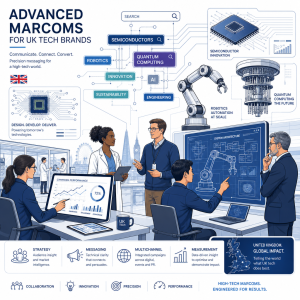

High tech marcoms has become a much more technical discipline. Semiconductor companies, robotics firms, quantum computing specialists and hardware manufacturers all need marketing that can explain complex products clearly while helping the right people find them online. That sounds straightforward until a buying journey includes engineers, procurement teams, investors, partners and several internal reviewers. Search behaviour is changing too, which gives marketing teams plenty to think about.
The strongest programmes now sit across content, search, data and sales enablement. A polished campaign still matters, although it needs a useful technical foundation underneath it. Here are seven trends shaping high tech marcoms over the next few years.
1. Search is moving into the answer layer
People still use Google, yet many early research journeys now pass through AI-generated answers, specialist platforms and conversational search tools. A buyer may ask an AI system to compare chip architectures, identify robotics suppliers or explain the practical value of edge computing. The answer can shape the shortlist before anyone visits a company website.
This is where generative engine optimisation, or GEO, enters the conversation. GEO for semiconductor companies involves making technical information easy for search systems to understand, retrieve and cite. Clear definitions, strong evidence, named experts and well-structured pages all help. The same approach applies to GEO for high tech companies, GEO for biotech and GEO for robotics.
- Create pages that answer specific technical and commercial questions.
- Use consistent terminology across product pages, documentation and media coverage.
- Support claims with test results, specifications, standards, case studies or named sources.
- Build topic depth around the problems customers are trying to solve.
AI search rewards useful detail. A page that says a platform is advanced has little value on its own. A page that explains latency, integration requirements, operating conditions and deployment constraints gives both readers and machines something to work with.
2. Technical content is becoming a commercial asset
Technical content used to sit in a documentation area, often separated from the main marketing site. That separation is fading. Engineers and technical buyers want access to architecture diagrams, compatibility information, performance data and implementation guidance while they are evaluating a supplier.
A strong content programme brings those resources into the wider customer journey. A semiconductor business might publish a detailed guide to thermal management, then link it to a product family, a reference design and an application note. A robotics company could connect a page about machine vision with integration advice, safety considerations and a relevant customer example.
This calls for close work between subject matter experts, product marketers, SEO specialists and web teams. Editors need enough technical context to ask sensible questions. Engineers need a practical way to review content without spending half a day inside a CMS. The process takes care, yet the resulting material can support discovery and sales conversations for months.
Could an engineer understand the core idea, could a procurement lead see its business relevance, and could a search engine identify the page's subject? If one answer is unclear, the content needs another pass.
3. First-party data is guiding better decisions
High tech marketing teams often have plenty of data. It can sit across CRM records, marketing automation platforms, product analytics, event systems and distributor portals. The hard part comes when those sources describe the same account in different ways.
First-party data gives teams a clearer view of what audiences read, download and return to. It can show that a visitor who started with an article on silicon carbide later viewed packaging information, a design guide and a contact page. That sequence says something about intent. It can also reveal gaps in the journey, such as a strong product page with no clear route to technical support.
Privacy expectations remain important, especially for businesses operating across the UK and European markets. Teams need clear consent practices, sensible data retention and reporting that people can understand. Good measurement should help marketers make decisions. A dashboard with dozens of disconnected figures rarely does much for anyone.
4. Topic authority is replacing short-lived keyword campaigns
A single keyword rarely represents the full buying journey in a specialist market. Someone searching for semiconductor SEO may later look for wafer processing, chip packaging, supply chain resilience or a specific application. A robotics buyer may begin with automation software and move towards robot vision, safety certification and system integration.
High tech websites benefit from connected topic clusters. Each cluster can include an overview page, detailed technical articles, product pages, supporting resources and customer evidence. Internal links help visitors move through the subject, while structured page relationships give search engines more context.
- Map the questions customers ask at each stage of research.
- Group related terms around a clear product or application theme.
- Give every important page a distinct purpose.
- Review older content when products, standards or market language change.
This work is especially useful for specialist areas such as SEO for quantum computing, SEO for robotics, SEO for biotech and SEO for hardware manufacturers. Each field has a small audience with high information needs. Depth tends to matter more than publishing volume.
5. Technical SEO is becoming part of product experience
Website performance affects how people experience a brand. A slow product catalogue, difficult documentation portal or confusing regional site can weaken confidence before a sales conversation begins. Technical SEO services now cover a wider set of practical issues, including crawlability, structured data, international architecture, page templates, JavaScript rendering and accessibility.
Enterprise sites add another layer of complexity. They may contain thousands of URLs, several domains, multiple languages and content owned by different teams. Enterprise SEO consulting can bring those moving parts into one operating model. It can also give marketing teams a way to prioritise fixes according to commercial value.
The best technical work often stays invisible to the audience. A cleaner site structure, better internal linking and faster templates simply make the website easier to use. That quiet improvement has a long shelf life.
6. Trust signals are carrying more weight
High tech purchases involve risk. A buyer may need confidence in a supplier's manufacturing capability, compliance record, support model and long-term stability. Marketing content has to make those details easy to verify.
Trust can come from many places: named technical authors, certification details, customer stories, independent testing, partner references and transparent product documentation. Company pages also matter. Search engines and AI systems look for signs that an organisation has real expertise connected to the subject it discusses.
This is a useful moment for communications and SEO teams to work together. A press release may support awareness for a short period. A detailed technical page, linked to a credible announcement and a relevant expert, can continue helping people long after the news cycle has moved on.
7. Marketing and sales content are becoming one system
Technical buyers often spend weeks researching before speaking with sales. During that time, they may visit product pages, read application notes, watch demonstrations, compare suppliers and share links with colleagues. Every piece of content contributes to their view of the company.
This makes consistency important. Product language, technical claims and positioning need to travel across the website, email campaigns, events, social posts and sales presentations. A content library can help sales teams find the right resource for a specific application or buyer question.
Marketing
Builds discoverable content around markets, applications and technical questions.
Sales
Uses relevant evidence to support conversations with named accounts and buying groups.
Product teams
Provide the detail that keeps claims accurate, useful and credible.
The structure does not need to be elaborate. A shared editorial calendar, a clear review process and regular feedback from sales can change the quality of a programme quite quickly.
What these trends mean for high tech teams
The direction of travel points towards deeper cooperation. Search specialists need access to technical knowledge. Product marketers need a view of search demand. Web teams need clear priorities, and subject matter experts need a process that respects their time.
For a semiconductor or high tech business, the practical starting point is often an honest review of the current customer journey. Check how easily people can find core products. Look at the questions your support and sales teams answer repeatedly. Review which pages earn attention from the right audience. Those findings can shape a useful roadmap for content, technical SEO services and GEO.
High tech marcoms is settling into a more connected role. It reaches into search visibility, technical credibility, website performance and the conversations that happen before a lead enters the CRM. Companies that bring those areas together will give their audiences a clearer way to understand difficult products and make confident decisions.