In the early days of Generative AI, prompt engineering was often dismissed as a "hobbyist" skill—a way to get a chatbot to write a funny poem or summarise a long email. But as we move through 2026, the corporate landscape has shifted. AI is no longer a curiosity; it is a critical layer of the enterprise stack.
The "Luddite Fallacy" we’ve discussed before suggests that technology won't kill work, but it will certainly change how we execute it. Nowhere is this more apparent than in Advanced Prompt Engineering. It has evolved from simple text instructions into the primary interface between human intent and machine execution. For business leaders, mastering this isn't just about "using AI"—it’s about architecting the logic that drives your company's competitive advantage.
Why Prompt Engineering is the #1 Business Skill in 2026
Most leaders underestimate prompt engineering because they view it as a task they can delegate to an intern. However, industry data from PwC and Gartner shows that the gap between a "standard" prompt and an "engineered" prompt is the difference between a 10% efficiency gain and a 340% higher ROI on AI investments.
Here is why prompt engineering has become a mandatory executive competency:
1. Reducing "AI Hallucination" and Risk
One of the biggest barriers to AI adoption in the C-suite is the fear of inaccuracy. A poorly structured prompt can lead to "hallucinations"—where the AI confidently presents false data as fact. Advanced techniques like Retrieval-Augmented Generation (RAG) and Chain-of-Thought (CoT) reasoning allow leaders to build "guardrails" directly into their instructions, reducing error rates by up to 76%.
2. The Multiplier Effect on Productivity
Research from ProfileTree (2026) indicates that organisations implementing structured prompt engineering frameworks see average productivity improvements of 67% across AI-enabled processes. Without these standards, teams often get stuck in a "trial and error" loop, wasting expensive compute tokens and human hours on refining mediocre outputs.
3. Institutional Knowledge Capture
In the past, when a senior strategist left a firm, their "mental model" left with them. Advanced prompt engineering allows you to codify those mental models into Prompt Libraries. You can essentially "bottle" your best analyst’s reasoning process and make it accessible to every junior employee in the building.
From "Fuzzy" to "Functional": The Anatomy of a Good Prompt
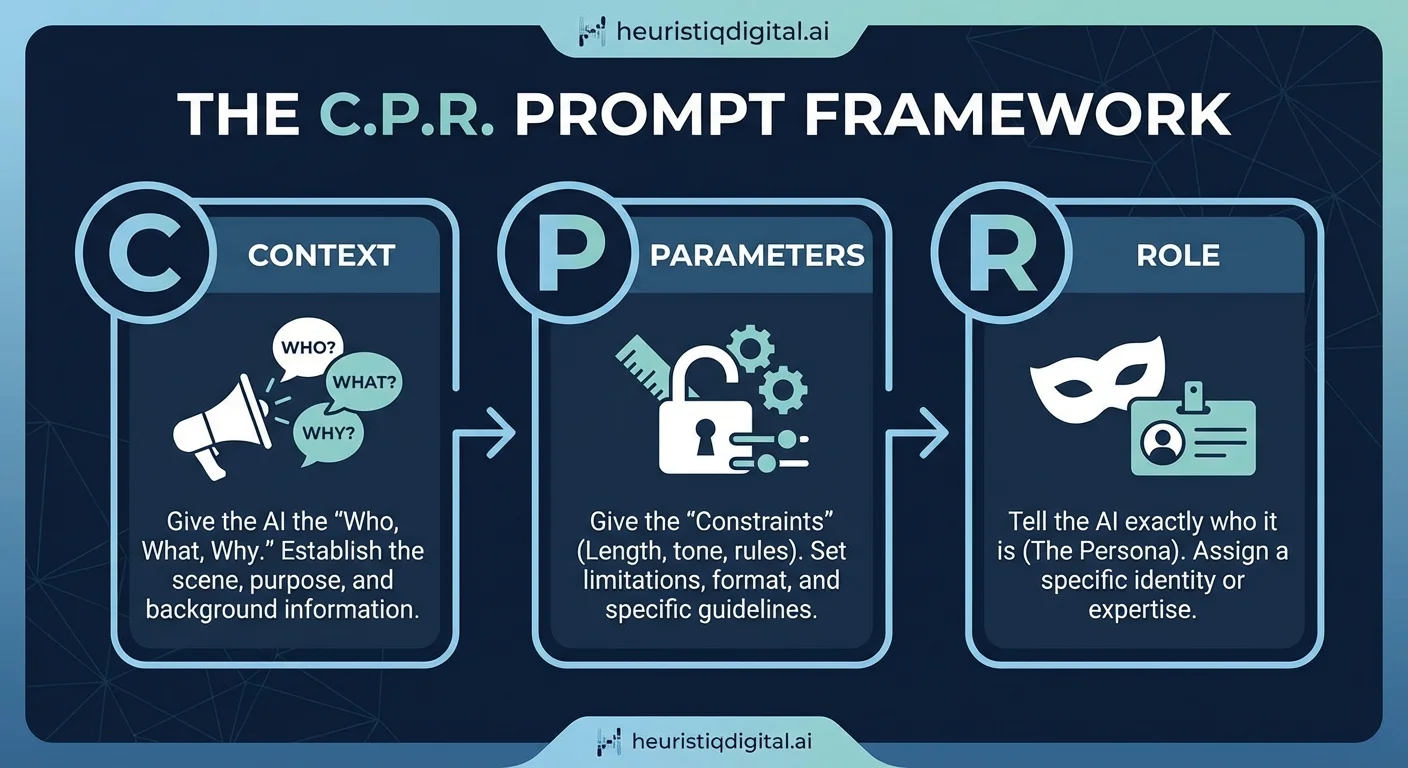
The difference between a "Bad" prompt and an "Advanced" prompt is the level of Context, Constraints, and Personas.
A generic, surface-level summary that reads like a Wikipedia entry. Lacks industry nuance and fails to provide actionable insights for decision-makers.
A structured, boardroom-ready report that connects high-level market trends to specific business opportunities and clear strategic pivots.
Produces a generic "We are sorry for the inconvenience" message. This often feels robotic to the client and may actually escalate the frustration by failing to acknowledge specific pain points.
Generates a high-touch, brand-aligned response that preserves the professional relationship, manages expectations, and protects profit margins while providing real value.
Advanced Techniques You Need to Know
To truly rank for "advanced prompt engineering for business," you must move beyond simple "Ask/Answer" models. In 2026, the most valuable techniques involve Logical Scaffolding:
Few-Shot Prompting
Provide 2-3 "gold standard" examples within your prompt. This allows the AI to instantly mirror your specific brand voice, formatting requirements, and nuance without lengthy explanations.
Chain-of-Thought (CoT)
By explicitly instructing the AI to "think step-by-step," you force the model to reveal its internal reasoning. This significantly improves accuracy in complex tasks like financial forecasting or legal analysis.
The "Director" Role
Treat the AI as a highly competent subordinate. Provide a Clear Goal, Specific Context, and Explicit Output Format (e.g., Markdown table or Executive Summary) to ensure boardroom-ready results every time.
Conclusion: Don't Just Use AI—Direct It
Prompt engineering is the "New Business Interface Layer." It is the steering wheel for the most powerful engine of productivity humanity has ever created. If you are a business leader who still views AI as a "magic box," you are missing the leverage it offers.
By investing in Advanced AI Prompt Engineering Training, you aren't just learning a tool—you are learning to communicate with the future of your industry. In 2026, the most successful leaders won't be the ones with the most technical knowledge, but the ones who can translate human intent into machine-driven results with the highest precision.