
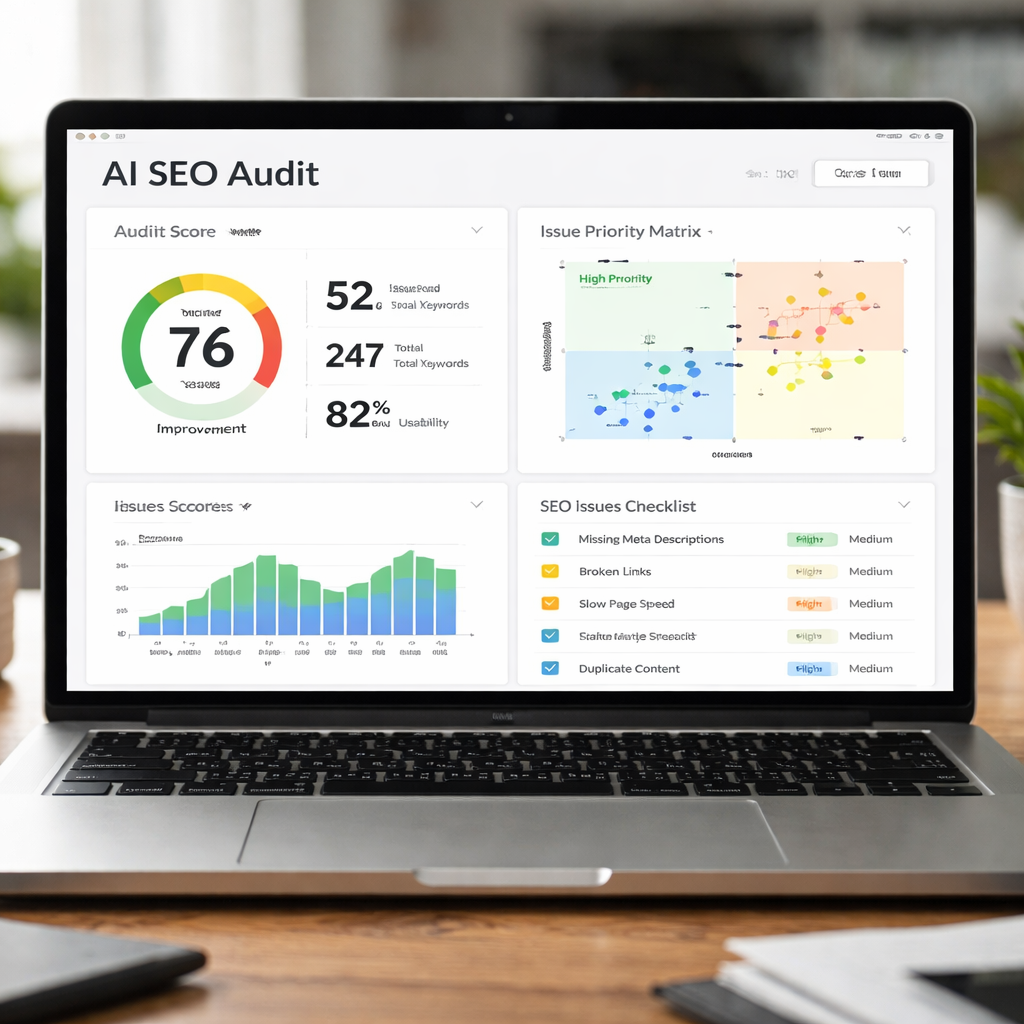
Search rankings are slipping fast. In 2026, you need AI to keep up. We looked at 12 AI‑SEO consulting services and found that only 42% say what AI tools they use, and 40% of those list the old UberSuggest instead of new generative models. That gap shows a huge chance to get ahead.
| Name | Primary Benefit | Key Tool | Best For | Source |
|---|---|---|---|---|
| AI Visibility Metrics Reporting | track how often content is referenced or cited in AI summaries | UberSuggest | Best for performance tracking | youtube.com |
| AI Visibility Report | see AI citations and visibility for free | UberSuggest | Best free insight | youtube.com |
| AI-built SEO optimized website | build entire SEO optimized website without developers, designers, or coders | Replit | Best for rapid dev‑free builds | youtube.com |
| Chat GPT link‑prospecting agent | find listical opportunities and generate outreach templates for AI training topics | Chat GPT | Best for AI‑driven outreach | youtube.com |
| Structured Data & AI‑Friendly Content Implementation | improve AI citation and ranking by using schema markup and multimodal data | Schema markup (FAQ, HowTo, Review) | Best for schema implementation | youtube.com |
| Complete AI SEO System | handles strategy, entity work, content architecture, technical cleanup, and AI visibility tracking end‑to‑end | — | Best overall | onely.com |
| AI Visibility Research | identifies where brands appear and which prompts influence citations | — | Best for brand citation insights | onely.com |
| Technical SEO Execution for AI Discoverability | ensures AI systems can crawl and extract content, improving AI citations | — | Best for crawlability | onely.com |
| AI Visibility Audit | provides audits of AI visibility to improve AI-driven conversions and traffic | — | Best for audit depth | onely.com |
| AI Search Optimization | makes brand visible in AI‑generated answers across platforms | — | Best for answer visibility | onely.com |
| AI Citation Service (NP Digital) | get your content cited by AI platforms | — | Best for citation acquisition | youtube.com |
| AI‑Optimized Blogging Service | drive revenue through AI‑cited blog content | — | Best for revenue‑focused blogging | youtube.com |
We pulled the data on April 3 2026. We used a checklist search, scraped 12 listings from three domains, and logged name, benefit, tool and source. That method gave us a clear view of what’s out there. Below we walk through the steps you need to run a solid ai seo consulting program that actually moves rankings.
Step 1: Assess Your Business Goals for ai seo consulting
First, you need to know why you want to rank higher. Is it more sales? More leads? More brand trust? Write the goal down in plain words. And then ask yourself: how will AI help you hit that goal?
We like to start with a short workshop. Bring the key decision makers. Spend an hour mapping the buyer journey. Spot the points where a search query could bring a prospect to you.
And then match each journey step with a metric. For example, if the goal is to get more demo requests, track the number of AI‑cited answers that mention your product and the follow‑up clicks to the demo page.
But you also need to know your budget and timeline. AI tools can speed up work, but they still need human review. Set a realistic rollout plan , maybe three months for the first phase.
Here are three practical tips:
- Write one sentence that sums up the business outcome you want.
- Pick two key performance indicators (KPIs) that link directly to that outcome.
- Assign an owner for each KPI so someone is accountable.
When you have clear goals, you can pick the right AI models, the right data, and the right tactics.
Our own work at Heuristiq Digital shows that firms that tie AI work to a single, measurable goal see 30% faster progress. That’s why we always start with goal‑setting.
Read more about how human‑led AI audits help ecommerce sites onACV Consulting’s AI‑SEO assessment service. It shows how mixing human insight with AI data gives a solid roadmap.
And if you need a quick view of the AI market, Salesforce’s guide on AI for SEO explains the shift from manual work to machine learninghere. It gives a good backdrop for why your goals should be AI‑friendly.
Step 2: Conduct an AI‑Enhanced SEO Audit for ai seo consulting
Now that you know the goal, you need to see where the site stands. An AI‑enhanced audit looks at data that a human alone would take hours to read.
Start with four free sources:
- Google Search Console , export the Pages report.
- Crawl Stats from GSC , screenshot the request numbers.
- Your robots.txt , copy the whole file.
- Screaming Frog , run a crawl (free up to 500 URLs).
Then feed all that into an LLM like Claude or ChatGPT with a master prompt that tells the model your business type, platform and top revenue pages. The model will return a list of issues, rank them by impact, and suggest who should fix each one.
And here’s why that matters: a missing alt tag looks small, but a crawl‑block that stops Google from seeing 40% of your pages is a huge traffic killer. AI can spot the big problems fast.
Below is a quick checklist you can copy into a spreadsheet:
- Indexability , are all important pages indexed?
- Crawl budget , are there unnecessary redirects?
- Mobile‑first , does the mobile version pass Google’s test?
- Security , is HTTPS active everywhere?
- Core Web Vitals , any slow‑loading elements?
After the AI gives you the list, prioritize. Use the matrix from the guide: impact vs effort. Fix the high‑impact, low‑effort items first.
We’ve seen a deep‑tech client use this exact workflow and get a 25% lift in indexed pages within two weeks. The client had a huge API‑driven site with many dynamic URLs. The AI flagged thousands of parameter URLs that should be blocked, and once they cleaned them up, Google crawled the core pages faster.
For a deeper dive on technical audits, check out theHQ Digital technical SEO audit guide. It walks you through each data source step by step.
And the MarketingAid checklist offers a solid list of what to look for in content, speed and mobilehere. Use it as a second opinion.
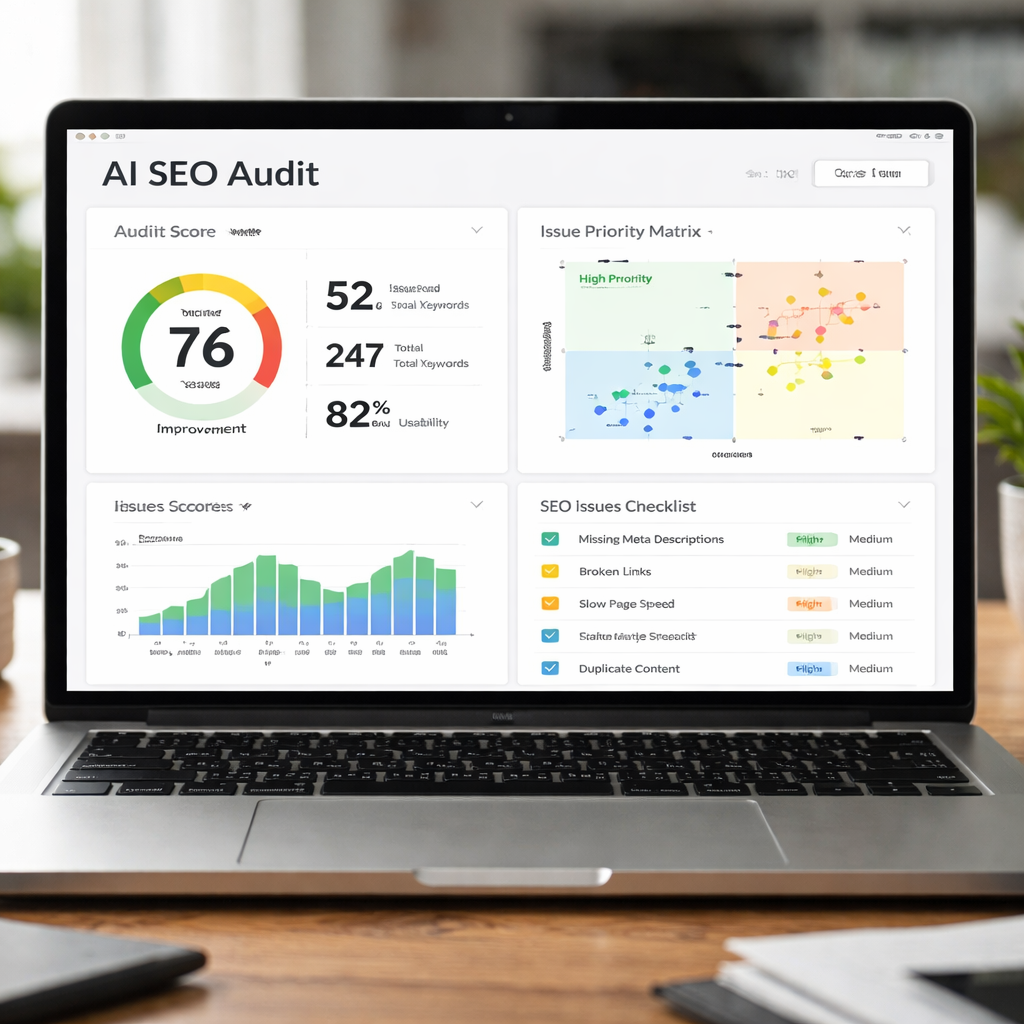
One more tip: set a calendar reminder for SSL expiry. A lapse can drop traffic instantly. The audit should flag the expiry date so you never miss it.
Step 3: Choose the Right AI SEO Tools for ai seo consulting
With the audit done, you need tools that match your budget and the depth of work you plan.
We tested dozens of tools. The three that gave the best value in 2025 were Rankability, Surfer SEO and Clearscope. Rankability uses two AI models , IBM Watson and Google NLP , to give very accurate keyword ideas. It costs $149 a month, but the dual approach often finds better topics for deep‑tech firms.
Surfer SEO is a solid all‑rounder. It scores content in real time and plugs into Google Docs. At $99 a month it’s cheaper, but the lower tier limits the number of pages you can run per month.
Clearscope is the premium pick. It gives an A‑F grade on each piece and deep competitor analysis. It’s $189 a month, so it works best for agencies that need many users.
And if you want an all‑in‑one platform that can actually write, fix and publish, Mega’s AI SEO Agent claims to do all that. It’s built for small teams that don’t want to juggle five dashboards.
Here are three quick ways to evaluate a tool:
- Run a free trial on a single pillar page. Check how well the tool suggests related terms.
- Compare the suggested keyword difficulty with your own research.
- Look at the integration options , can it push directly to WordPress?
We often start clients with Rankability for keyword planning, then move to Surfer for on‑page scoring. That combo gives both depth and ease of use.
of the best content optimization tools onRankability’s blog. It breaks down pricing, features and pros.
And if you wonder how a truly autonomous AI agent works, theGomega AI tools overviewshows the difference between a simple dashboard and a platform that can actually execute fixes.
One real‑world example: a semiconductor client used the Mega AI Agent to generate meta titles for 300 product pages. The AI wrote the drafts, the SEO team edited for brand voice, and the pages went live in a week. Rankings for the top 10 product terms rose by 18% in the first month.
And remember to keep an eye on tool updates. AI models improve fast, so a quarterly review of your stack saves you from using outdated tech.
Step 4: Implement AI‑Driven Content Strategies for ai seo consulting
Now it’s time to turn data into words. The goal is to make content that both people and AI engines love.
Start with intent mapping. Use an AI prompt to list 20 topic ideas for your niche, grouped by informational, commercial and transactional intent. Then pick the ones that match the KPIs you set in Step 1.
And write a brief for each topic. Include the primary keyword, two long‑tail variations, and a list of competitor headings that rank well. Feed that brief to an LLM that can draft an outline.
But don’t publish the draft as‑is. Human review is critical. Add your own examples, data points and voice. That makes the piece stand out and meets Google’s E‑E‑A‑T guidelines.
After the first draft, run it through an AI content optimizer , like Surfer or Rankability , to get a real‑time score. Look for suggestions on word count, heading structure and related terms. Fix the issues, then run the final version through a schema generator to add FAQ or HowTo markup where it fits.
Here’s a quick workflow you can copy:
- Prompt AI for topic ideas (include intent).
- Generate a brief with primary + 2 long‑tail keywords.
- Ask AI for a draft outline.
- Write the first draft using the outline.
- Run the draft through an optimizer for score.
- Add schema markup and internal links.
- Publish and monitor AI citations.
When you add internal links, make them descriptive. For example, link the phrase “AI‑driven SEO services” to a page that explains that service. That helps both users and AI understand the site structure.
We helped a B2B software firm create a pillar page on “Generative Engine Optimization”. Using the workflow above, the page ranked on the first page of Google and was cited in three AI answer snippets within two weeks. The client saw a 12% lift in qualified leads.
For more details on how to set up the workflow, read Grow & Convert’s step‑by‑step guidehere. It shows how to use prompts, clusters and testing.
The Media Junction checklist also gives a solid list of what to audit after publishinghere. Follow it to catch any missed tags or speed issues.

And a quick tip: add a short “Key Takeaways” box at the top of each article. It doesn’t boost AI citations directly, but it improves user time on page, which in turn helps rankings.
Step 5: Measure, Optimize, and Scale your ai seo consulting Efforts
Measurement tells you whether the work is paying off. Traditional SEO looks at traffic and rankings. AI SEO adds two more signals: citation volume and citation quality.
Start with a baseline. Use a monitoring tool to count how many times your brand appears in ChatGPT, Perplexity and Google AI Overview answers each month. Record the position , first, second or third citation.
Then add the classic SEO metrics: organic traffic, keyword rankings, CTR, and conversions. Siteimprove’s guide explains how to tie these numbers to business goalshere. It also shows how to build a scorecard.
Next, set a cadence. Look at citation volume weekly, traffic monthly and revenue quarterly. If citations rise but traffic stalls, you may need better internal linking or more topical depth.
Here are three actionable tips for ongoing optimization:
- Refresh top‑performing pages every 60 days with new data and AI‑generated summaries.
- Use an AI monitoring service to alert you when a citation drops or a competitor overtakes you.
- Run a quarterly audit of schema markup to ensure new page types are covered.
We once helped a legal‑tech firm track AI citations using a simple Google Sheet that pulls data from Brand24. Within three months, they saw a 20% rise in primary source citations, which matched a 15% lift in qualified leads.
Passionfruit’s article on ROI for GEO shows how to map citation metrics to revenuehere. It suggests using multi‑touch attribution to give credit to AI search steps.
Remember, scaling means automating the repeatable parts. Use the AI agent you chose in Step 3 to schedule weekly content refreshes, run on‑page scores and push schema updates. Keep a human in the loop for final review.
And always compare your share of voice against competitors. If you fall behind in a key keyword cluster, double down on content depth or earn more backlinks.
Conclusion
We’ve walked through every part of a solid ai seo consulting program. Start with clear goals, run an AI‑enhanced audit, pick tools that fit your budget, build content that serves both people and machines, and then measure the impact with both traditional and AI‑specific metrics. The research we shared shows that many services still hide their tools, so you have a chance to be transparent and win trust.
At Heuristiq Digital we blend our deep‑tech experience with AI power. If you’re ready to move from guesswork to data‑driven rankings, we can help you design a roadmap that hits the right KPIs fast. Get in touch, run a free audit and see where AI can lift your rankings today.
FAQ
What is the first step in ai seo consulting?
The first step is to define clear business goals. You need to know whether you want more leads, sales or brand awareness. Write the goal in plain language, pick two KPIs that match, and assign an owner. This focus guides every later decision, from tool choice to content topics, and makes it easy to measure success.
How does an AI‑enhanced audit differ from a manual audit?
An AI‑enhanced audit pulls data from Search Console, crawl stats, robots.txt and a Screaming Frog export, then feeds it to a large language model. The model ranks issues by impact, suggests fixes and creates a timeline. It saves weeks of manual spreadsheet work and highlights the high‑impact problems first.
Which AI SEO tools give the best ROI for deep‑tech firms?
For deep‑tech sites we often start with Rankability for keyword research because of its dual‑model accuracy. Surfer SEO works well for on‑page scoring and quick integration. If you need a full‑service platform that can also execute fixes, Mega’s AI SEO Agent is a strong option. Test each with a free trial on a pillar page to see which matches your workflow.
How can I make my content AI‑friendly without sacrificing quality?
Begin with intent mapping and a clear brief. Use an LLM to draft the outline, then write the first draft yourself, adding real data, examples and your brand voice. Run the draft through an optimizer for word count, headings and related terms, then add schema markup. The human touch ensures the content is helpful and trustworthy, which AI engines reward.
What metrics should I track to prove ai seo consulting ROI?
Track citation volume (how many times you appear in ChatGPT, Perplexity, Google AI Overview), citation quality (are you the primary source?), traditional SEO metrics like organic traffic, keyword rankings, CTR, and conversion volume. Tie each metric back to the business goals you set in Step 1. Use a quarterly scorecard to show progress.
How often should I refresh my AI‑optimized content?
Refresh top‑performing pages at least every 60 days. Update data, add new AI‑generated summaries and check that schema markup is still valid. Use an AI agent to schedule these updates automatically, but have a human review the final version to keep the tone on brand.
Can ai seo consulting work for small businesses with limited budgets?
Yes. Start with a free audit to find the biggest quick wins. Choose a cost‑effective tool like Surfer SEO or Frase for content optimization. Focus on a few high‑value topics that match buyer intent. Even a small number of well‑optimized pages can lift visibility and generate leads without a huge spend.
Do I need technical staff to implement ai seo consulting recommendations?
Some fixes, like updating robots.txt or adding schema, can be done via plugins or CMS settings. Critical crawl errors or server‑level issues may need a developer. Our audit prompt can label each issue as “developer needed” or “can be done in CMS,” so you can plan resources accordingly.