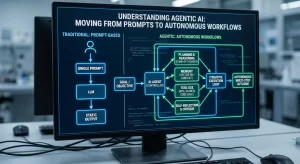
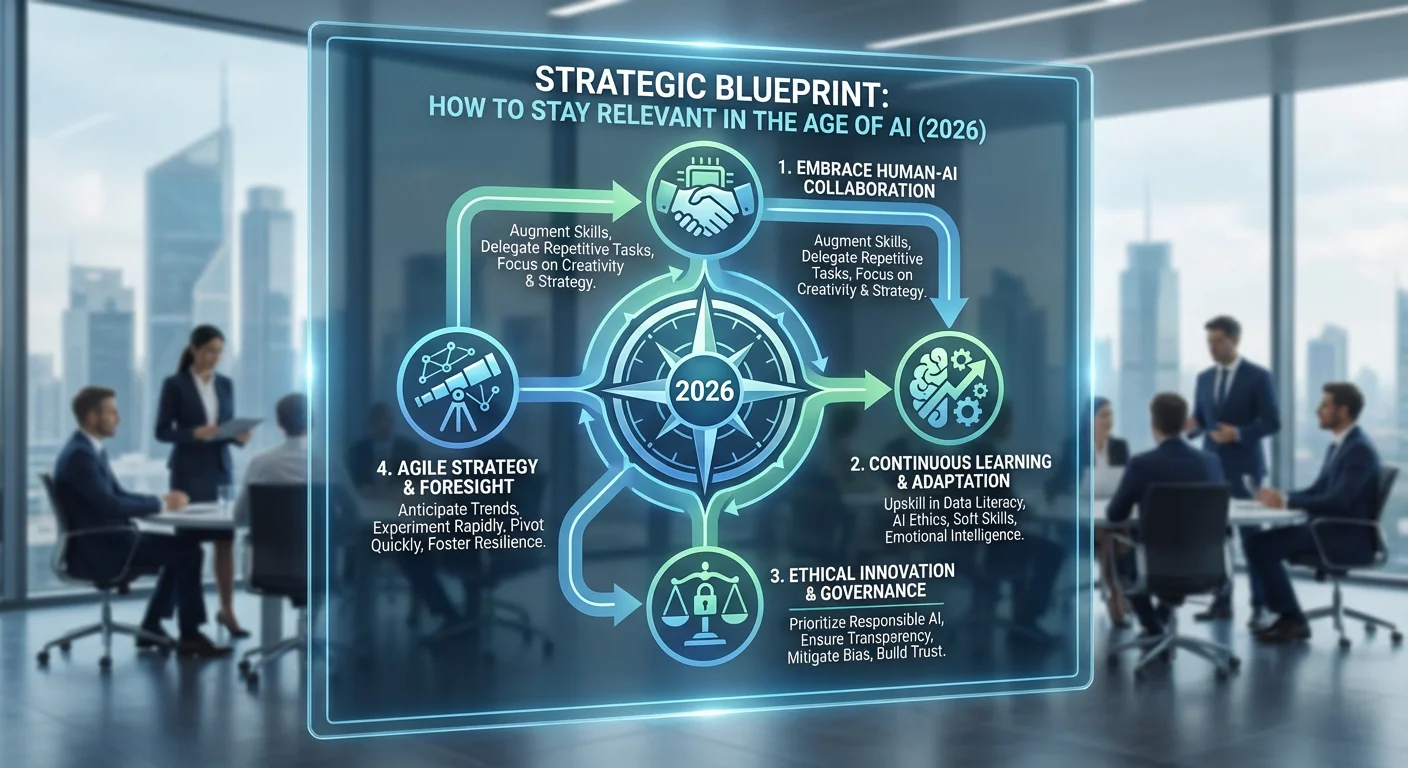
In 2026, the question is no longer "Will AI take my job?" but rather "How fast can I evolve alongside it?" We have moved past the initial shock of generative AI into an era of Agentic Workflows—where AI doesn't just suggest text, but executes multi-step business processes. To stay relevant today, you don't need to be a coder; you need to be an Orchestrator.
According to PwC’s 2026 Business Predictions, the most successful professionals are those following the 80/20 AI Rule: Technology provides 20% of the value, while the other 80% comes from humans redesigning work to drive impact.
1. Cultivate "Change Fitness"
The most valuable skill in 2026 is Change Fitness—the psychological and professional ability to pivot as AI capabilities expand. Research from Harvard Business School suggests that "digital mindset" is no longer enough. You must actively look for "second-order effects"—not just how AI makes a task faster, but how it changes the very meaning and strategy of your role.
2. Master the "Durable Skills" (The Human Moat)
As AI handles the logic, humans must provide the judgment. These "Durable Skills" are your career's defensive moat.
- Ethical Oversight: AI can find patterns, but it cannot navigate the "hidden trade-offs" of corporate values.
- Relationship Architecture: In an automated world, high-touch human relationships are the ultimate differentiator.
- Strategic Intuition: AI is predictive (based on the past); humans are visionary (based on what hasn't happened yet).
The AI Relevance Framework
Use these three pillars to audit your current career trajectory.
Move beyond "using" tools to "understanding" models. Know the difference between Predictive and Generative AI and when to deploy each.
The "Director" mindset. Learn to evaluate AI outputs for bias, hallucination, and strategic alignment with your brand's unique IP.
Don't just optimise a process—reinvent it. Use AI to collapse 10-step manual workflows into single-step automated agents.
3. The 45+ Advantage: Context is King
If you are mid-to-late career, your relevance is actually at an all-time high. AI lacks historical context. While it can process data, it cannot "read the room" or interpret the emotional reactions of a board of directors during a pivot.
Your role is to move from execution to governance. By 2027, 92% of companies plan to invest heavily in GenAI, but only 48% of employees feel they have the training to use it safely. The person who bridges that gap—combining decades of industry wisdom with AI fluency—is the most "future-proof" person in the building.
4. How to Reskill (Without Quitting Your Job)
- The 10-Minute Daily Loop: Spend 10 minutes a day testing a new AI feature. Micro-learning is the only way to keep up with the 2026 pace.
- Build an "AI Portfolio": Don't just list skills on your CV. Show a workflow you built that saved your company money or time.
- Learn to Edit, Not Write: Shift your mindset. You are now the Editor-in-Chief of your department. AI drafts the content; you provide the soul and the strategy.