The Death of the Ultimate Guide? This question captures a seismic shift in how Google evaluates content quality. For years, SEO professionals have chased word counts, believing longer meant better. The 10,000-word comprehensive guide became the gold standard. But Google's algorithm has evolved beyond this simplistic metric. Today, the search giant prioritises utility, user intent, and practical value over sheer volume. This change particularly impacts high-tech and semiconductor companies, where technical precision often matters more than exhaustive explanations.
The shift reflects Google's sophisticated understanding of user behaviour. People don't always want encyclopaedic articles. Sometimes they need quick answers, specific calculations, or precise technical specifications. A 500-word article that solves a specific problem now outranks a 5,000-word guide that buries the answer in endless paragraphs.
Content Evolution Timeline
Keyword density rules
Long-form dominance
Utility-first approach
The Technical SEO Reality for Semiconductor Companies
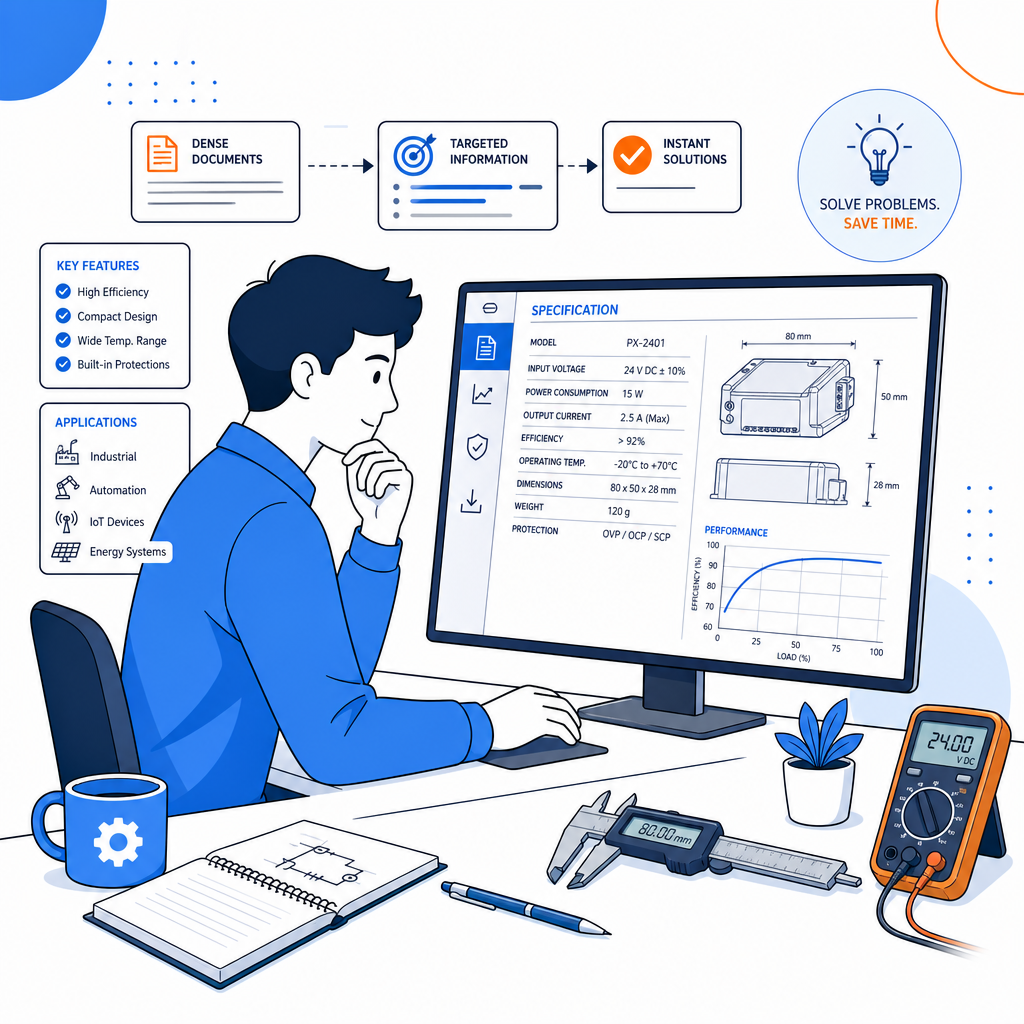
Semiconductor companies face unique content challenges. Their audiences include engineers, procurement specialists, and technical decision-makers who value precision over verbosity. A detailed datasheet often proves more valuable than a comprehensive guide explaining basic semiconductor principles.
Google's algorithm now recognises this distinction. When someone searches for 'silicon wafer specifications', they want exact measurements, not a 3,000-word history of semiconductor manufacturing. The search engine has learned to match content type with user intent.
| Content Type | User Intent | Optimal Length | Google Preference |
|---|---|---|---|
| Technical Specification | Find exact data | 300-800 words | High utility |
| Product Comparison | Make decisions | 1,000-2,000 words | High utility |
| Industry Overview | Learn concepts | 2,000-4,000 words | Medium utility |
| Ultimate Guide | Comprehensive knowledge | 5,000+ words | Declining utility |
The data reveals a clear pattern. Google favours content that matches user intent over content that aims for comprehensive coverage. This shift particularly benefits technical companies that can create focused, utility-driven content.
Consider quantum computing SEO. A researcher looking for 'quantum decoherence rates' needs specific data, not a beginner's guide to quantum mechanics. Companies that provide targeted, technical content now rank higher than those offering broad, introductory material.
Why The Death of the Ultimate Guide Matters for High-Tech Marketing
The decline of ultimate guides represents more than an SEO trend. It signals a fundamental shift in how technical buyers consume information. B2B purchase decisions in high-tech industries follow complex, non-linear paths. Decision-makers don't want exhaustive guides. They want specific answers at specific moments.
This change affects content strategy across all technical verticals. Robotics companies can't rely on broad 'Guide to Industrial Automation' articles. Biotech firms need more than 'Everything About Gene Sequencing' posts. The market demands precision.
- Technical specifications beat general explanations
- Problem-solving content outranks educational overviews
- Industry-specific insights trump broad market surveys
- Interactive tools and calculators provide more value than text-only guides
- Real case studies and data prove more useful than theoretical examples
Google's algorithm now evaluates content through multiple utility signals. Time on page matters less than task completion. Bounce rate becomes irrelevant if users find exactly what they need quickly. The search engine measures satisfaction, not engagement duration.
Utility Signals Google Tracks
Did users accomplish their goal?
Does content match search purpose?
Do users come back for more?
How thoroughly do users engage?
For hardware manufacturers, this shift creates opportunities. Product pages with detailed specifications, comparison tools, and technical documentation often outrank generic industry guides. Users searching for 'PCB trace width calculator' want tools, not tutorials.
The implications extend beyond search rankings. Companies that understand utility-first content build stronger relationships with technical buyers. They become trusted resources rather than content producers. Trust drives business relationships in high-tech industries.
Practical Content Strategies for Technical Companies
Moving beyond ultimate guides requires strategic thinking about content purpose. Each piece should solve a specific problem or answer a particular question. This approach works especially well for technical industries where precision matters.
Start with user intent analysis. What do your customers actually search for? Generic terms like 'semiconductor manufacturing' generate broad guides. Specific queries like 'wafer fab yield optimization' demand focused solutions. Google rewards content that matches specific intent.
Content Audit Framework
High Utility Content
- Specific technical solutions
- Interactive calculators
- Detailed specifications
- Case study data
Medium Utility Content
- Industry comparisons
- Trend analysis
- Process explanations
- Best practices
Low Utility Content
- Generic overviews
- Keyword-stuffed guides
- Overly broad topics
- Outdated information
Technical companies should focus on creating content clusters around specific problems. Instead of one massive guide about 'Industrial Robotics', create separate pieces about robot programming, safety protocols, maintenance schedules, and ROI calculations. Each piece targets a specific user need.
Interactive content often provides the highest utility. Calculators, configurators, and comparison tools solve immediate problems. A PCB impedance calculator delivers more value than a 3,000-word article about transmission line theory. Google recognises this utility and ranks interactive content accordingly.
Geographic expansion opportunities (GEO) also benefit from utility-first thinking. Instead of creating broad country guides, focus on specific market requirements, regulatory differences, or technical standards. A page about 'EMC compliance requirements for Germany' serves users better than 'Complete Guide to European Electronics Regulations'.
Data-driven content performs exceptionally well in technical industries. Engineers and procurement specialists trust numbers over opinions. Market research, benchmarking studies, and performance comparisons provide concrete value. These pieces often rank higher than opinion-based industry guides.
The Algorithm Evolution Behind Utility-First Ranking
Google's shift towards utility reflects sophisticated machine learning capabilities. The algorithm now understands user satisfaction signals beyond traditional SEO metrics. Click-through rates matter less than task completion. Time on site becomes irrelevant if users find answers quickly.
Natural Language Processing (NLP) advances allow Google to evaluate content quality at a semantic level. The algorithm understands whether content answers user questions directly or forces users to hunt for information. This capability particularly benefits technical content that provides clear, structured answers.
Entity recognition helps Google understand technical context. When users search for specific semiconductor processes or quantum computing concepts, the algorithm can evaluate whether content addresses these topics with appropriate depth and accuracy. Surface-level coverage in ultimate guides no longer satisfies these requirements.
Google's Ranking Signal Evolution
Traditional Signals (Declining)
- Word count
- Keyword density
- Time on page
- Page views
- Backlink quantity
Modern Signals (Rising)
- Task completion
- Intent satisfaction
- Content utility
- User return behaviour
- Semantic relevance
Machine learning models now predict user satisfaction before ranking content. These models consider factors like content structure, answer completeness, and user journey paths. Technical content that provides clear, actionable information scores higher than comprehensive but unfocused guides.
The shift particularly impacts enterprise SEO consulting for technical companies. Traditional content strategies based on keyword volume and word count no longer deliver results. Companies need strategies that prioritise user value over search volume metrics.
Voice search and mobile usage patterns reinforce the utility-first trend. Users asking voice assistants technical questions want specific answers, not reading recommendations. Mobile users searching for technical specifications need information they can scan quickly. Both behaviours favour focused content over comprehensive guides.
Future-Proofing Content Strategy for Technical Industries
The Death of the Ultimate Guide signals a broader transformation in content strategy. Technical companies must balance comprehensive knowledge sharing with specific utility delivery. This balance requires sophisticated content planning and user research.
Successful technical content strategies now focus on problem-solving rather than education. Users searching for semiconductor manufacturing information often need specific solutions, not general knowledge. Content that solves immediate problems outranks educational material that might be useful someday.
Artificial Intelligence and machine learning will continue shaping these trends. Google's algorithm becomes more sophisticated at understanding user intent and measuring content utility. Technical companies that adapt early will gain competitive advantages in search rankings and user engagement.
Content Strategy Recommendations
Target Specific Intent
Create content for precise user needs rather than broad topics
Prioritise Utility
Build tools and resources that solve immediate problems
Measure Satisfaction
Track task completion rather than traditional engagement metrics
Iterate Based on Data
Continuously refine content based on user behaviour patterns
Geographic expansion strategies must also evolve. Companies expanding into new markets need location-specific utility content rather than broad market guides. A page about 'Japanese semiconductor import regulations' provides more value than 'Complete Guide to Asian Electronics Markets'.
Technical documentation increasingly serves dual purposes as content marketing and user support. Well-structured API documentation, installation guides, and troubleshooting resources often rank higher than traditional marketing content. These materials provide immediate utility while building brand authority.
The trend towards utility-first content creates opportunities for smaller technical companies to compete with larger rivals. A startup with excellent technical documentation can outrank established companies with generic ultimate guides. Quality and relevance now matter more than brand authority or content volume.
Integration with sales and support processes becomes crucial. Content that guides users through technical decisions or helps them configure solutions provides measurable business value. This content often converts better than traditional lead generation pieces while achieving higher search rankings.
Google's algorithm evolution represents a fundamental shift towards user-centric content evaluation. The Death of the Ultimate Guide reflects this transformation. Technical companies that adapt their content strategies to prioritise utility over volume will succeed in this new landscape. The future belongs to content that solves problems, answers specific questions, and provides immediate value.
For semiconductor companies, robotics manufacturers, and other high-tech businesses, this change creates opportunities. Focused, technical content that addresses specific user needs outperforms broad educational material. The companies that recognise this shift and adapt accordingly will dominate their niches in search results and customer relationships.