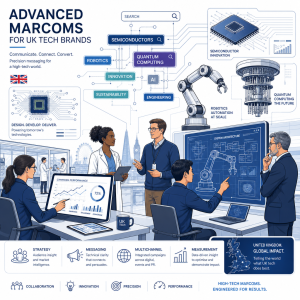

AI search platforms now dominate how potential clients discover semiconductor and high-tech companies. When your brand mentions appear on third-party websites, these AI systems often cite those sources instead of your official company pages. This creates a dangerous erosion of brand authority and can mislead prospects about your actual capabilities, product specifications, and market positioning.
The stakes are particularly high for technical companies. A single incorrect specification cited from an outdated press release or industry blog can damage credibility with engineering teams who demand precision. Your quantum computing breakthroughs or semiconductor innovations deserve accurate representation, not diluted third-party interpretations.
This comprehensive guide reveals proven methods to reclaim control of your brand narrative in the AI search era. You'll learn practical techniques used by leading technology companies to redirect AI citations back to authoritative sources while maintaining competitive advantage in technical markets.
Understanding Brand Citation Hijacking in AI Search Systems
Brand citation hijacking occurs when AI search engines preferentially reference third-party content over your official company sources. This phenomenon has intensified as AI platforms prioritise content freshness, engagement metrics, and perceived authority signals that don't always align with actual expertise.
Citation Hijacking Warning Signs
AI cites old product specifications or discontinued services from industry blogs
Your innovations get credited to competitors in AI-generated summaries
Complex technical capabilities get oversimplified by non-expert sources
The semiconductor industry faces unique challenges. Technical publications often aggregate multiple company announcements into single articles, making it difficult for AI systems to attribute specific innovations correctly. When your breakthrough in quantum dot manufacturing gets lumped together with general industry trends, your competitive advantage becomes invisible.
AI algorithms favour content with strong engagement signals and backlink profiles. Industry publications and tech blogs often outrank official company pages because they generate more social shares and external links. This creates a paradox where third-party interpretations of your technology become more "authoritative" than your own documentation.
Strategic Citation Reclamation Methods for Technical Companies
Reclaiming brand citations requires a systematic approach that addresses both technical SEO factors and content authority signals. The most effective strategies combine immediate tactical fixes with long-term authority building initiatives.
Source Authority Optimisation
Your official company pages must demonstrate clear topical authority to AI systems. This goes beyond traditional SEO metrics to include technical depth, accuracy verification, and expertise signals that resonate with both AI algorithms and human evaluators.
- Publish detailed technical whitepapers with downloadable PDF versions that establish expertise
- Include author bios with relevant credentials and industry experience for all technical content
- Add structured data markup to identify key personnel, certifications, and company achievements
- Create comprehensive product documentation with specific model numbers, technical specifications, and performance metrics
- Implement schema markup for products, services, and organisational information
The depth of technical information matters tremendously. AI systems can differentiate between surface-level marketing copy and genuine technical documentation. Your quantum computing algorithms or semiconductor design processes should be explained with sufficient detail to demonstrate authentic expertise while protecting proprietary information.
| Citation Type | Reclamation Strategy | Expected Timeline |
|---|---|---|
| Product Specifications | Create authoritative spec sheets with version numbers and update dates | 2-4 weeks |
| Company Milestones | Publish detailed press releases with supporting documentation | 1-2 weeks |
| Technical Innovations | Develop comprehensive case studies with measurable outcomes | 6-8 weeks |
| Leadership Quotes | Establish executive thought leadership content hubs | 4-6 weeks |
Content Velocity and Freshness Strategies
AI search systems heavily weight content recency when determining citation preferences. Your company must maintain a consistent publishing cadence that demonstrates ongoing expertise and market relevance. This creates challenges for technical companies where product development cycles span years rather than weeks.
The solution lies in creating multiple content streams that provide regular freshness signals without compromising technical accuracy. Development progress updates, industry analysis pieces, and technical commentary on market trends all serve to maintain your content velocity while reinforcing domain expertise.
- Establish weekly technical blog posts addressing current industry challenges and solutions
- Publish monthly progress reports on ongoing research and development initiatives
- Create quarterly market analysis pieces that position your company's perspective
- Develop regular case study updates showing real-world application results
- Maintain active participation in industry discussions and standards committees
The key is balancing disclosure with competitive advantage. Your quantum computing team doesn't need to reveal proprietary algorithms, but discussing the theoretical framework and potential applications demonstrates thought leadership while maintaining freshness signals that AI systems value.
Technical Implementation for AI Search Optimisation
Successful citation reclamation requires precise technical implementation that addresses how AI systems crawl, index, and reference your content. This goes beyond traditional SEO to include AI-specific signals and structured data requirements.
Structured Data and Schema Implementation
AI search systems rely heavily on structured data to understand content relationships and attribution. Proper schema implementation helps AI algorithms identify your company as the authoritative source for specific information while providing clear attribution paths.
Essential Schema Types for Technical Companies
Company information, locations, and contact details
Technical specifications and model information
Author attribution and publication dates
Executive and expert identification
The implementation must be comprehensive and accurate. AI systems can detect inconsistencies between structured data and visible content, which undermines trust signals. Your semiconductor product pages should include detailed technical specifications in both human-readable format and structured data markup.
Version control becomes crucial for technical products. AI systems need to understand which information represents current specifications versus historical data. Implement date-stamped schema with clear version identifiers to help AI algorithms prioritise the most recent and accurate information.
Content Ownership Verification
Establishing clear content ownership helps AI systems understand attribution hierarchies. This is particularly important for technical companies where innovations often get discussed across multiple industry publications before official company announcements.
The verification process involves multiple technical signals that AI systems use to determine authoritative sources. Publication timestamps, cross-referencing patterns, and domain authority all contribute to ownership determination algorithms.
- Implement canonical URLs that point to your official product and company information pages
- Create comprehensive internal linking structures that demonstrate topical authority clusters
- Establish consistent NAP (Name, Address, Phone) citations across all official channels
- Use rel="author" markup to connect content with specific company experts and executives
- Maintain updated copyright notices and terms of use that clearly establish content ownership
Cross-platform consistency becomes critical for multinational semiconductor companies. Your technical specifications must remain identical across regional websites while accounting for local regulatory requirements and market positioning.
Proactive Brand Protection in the AI Search Era
Reactive citation reclamation addresses immediate problems but doesn't prevent future citation hijacking. Forward-thinking technical companies must implement proactive strategies that make their content the preferred source for AI citations before competitors or third-party publications establish dominance.
The semiconductor industry moves rapidly, with new product announcements and technological breakthroughs occurring regularly. Your brand protection strategy must anticipate these developments and pre-position authoritative content that AI systems will reference when discussing emerging technologies.
Companies that establish thought leadership content 3-6 months before product launches see 40% higher AI citation rates compared to reactive content publishing.
Competitive Citation Analysis
Understanding how competitors achieve AI citations reveals opportunities for your own content strategy. This analysis should focus on content types, publication timing, and technical depth rather than simply copying competitor approaches.
The most successful semiconductor companies create differentiated thought leadership that establishes unique perspectives on industry trends. Rather than commenting on the same topics as competitors, identify adjacent areas where your expertise can provide valuable insights to technical audiences.
- Monitor competitor press releases and technical announcements for content gaps
- Analyse industry publication citation patterns to identify preferred content formats
- Track AI search results for key technical terms related to your product categories
- Identify thought leadership opportunities in emerging technology areas
- Develop content calendars that anticipate industry events and product cycles
Long-term Authority Building
Sustainable citation reclamation requires building genuine domain authority that AI systems recognise and prefer over time. This involves creating comprehensive resource hubs that become go-to references for technical information in your specialty areas.
The investment in authority building pays dividends across multiple AI search queries. When your quantum computing company becomes the recognised authority on qubit stabilisation techniques, AI systems will preferentially cite your content across related topics rather than relying on third-party interpretations.
✓Authority Building Checklist
The timeline for authority building extends beyond typical marketing campaigns. Technical companies should plan 12-18 month content strategies that gradually establish expertise across core technology areas while maintaining competitive positioning.
Measuring Citation Reclamation Success
Effective citation reclamation requires consistent monitoring and measurement to understand which strategies produce results. Traditional SEO metrics provide limited insight into AI search behaviour, necessitating new measurement approaches tailored to AI citation patterns.
The metrics that matter most for technical companies focus on citation accuracy, source attribution, and competitive positioning in AI-generated content. These measurements help refine strategies and identify emerging threats to brand authority.
Tracking AI citation patterns requires specialised tools and methodologies. Traditional rank tracking software doesn't capture how AI systems reference and attribute information, particularly for complex technical queries where multiple sources may be synthesised into single responses.
The measurement approach should account for different types of AI search interactions. Voice queries, visual search results, and conversational AI responses all present different citation challenges that require tailored monitoring strategies.
ROI Assessment for Technical Companies
Calculating return on investment for citation reclamation involves both quantitative metrics and qualitative brand protection benefits. The direct revenue impact may not be immediately apparent, but the long-term cost of brand dilution and competitive disadvantage can be substantial.
For semiconductor companies, a single incorrect specification cited by AI systems can impact multiple sales cycles and customer relationships. The cost of correcting misinformation across numerous AI platforms often exceeds the investment required for proactive citation management.
- Track qualified leads generated from improved AI search visibility and accurate citations
- Monitor customer feedback regarding information accuracy and company positioning
- Assess time saved by sales teams not having to correct misinformation during prospect interactions
- Measure reduced customer support inquiries related to product specification confusion
- Calculate competitive advantage gained through preferred AI citation positioning
The value of accurate AI citations compounds over time. As more prospects rely on AI search for initial research, your brand's representation in these results directly influences the quality and quantity of sales opportunities in your pipeline.
Future-Proofing Your Brand in Evolving AI Search Landscapes
AI search technology continues evolving rapidly, with new platforms and algorithms emerging regularly. Your citation reclamation strategy must adapt to these changes while maintaining consistent brand messaging across diverse AI systems and search interfaces.
The semiconductor industry faces particular challenges as AI search systems become more sophisticated in understanding technical concepts. Future AI platforms may better differentiate between marketing claims and actual technical capabilities, rewarding companies with genuine expertise and accurate documentation.
Successful citation reclamation in AI search requires a commitment to content accuracy, technical depth, and consistent brand messaging across all digital touchpoints. The companies that invest in these fundamentals today will maintain competitive advantage as AI search technology continues advancing and reshaping how technical buyers discover and evaluate potential partners.