by Andy Calloway | Aug 2, 2026 | Blog, GaN - Gallium Nitride
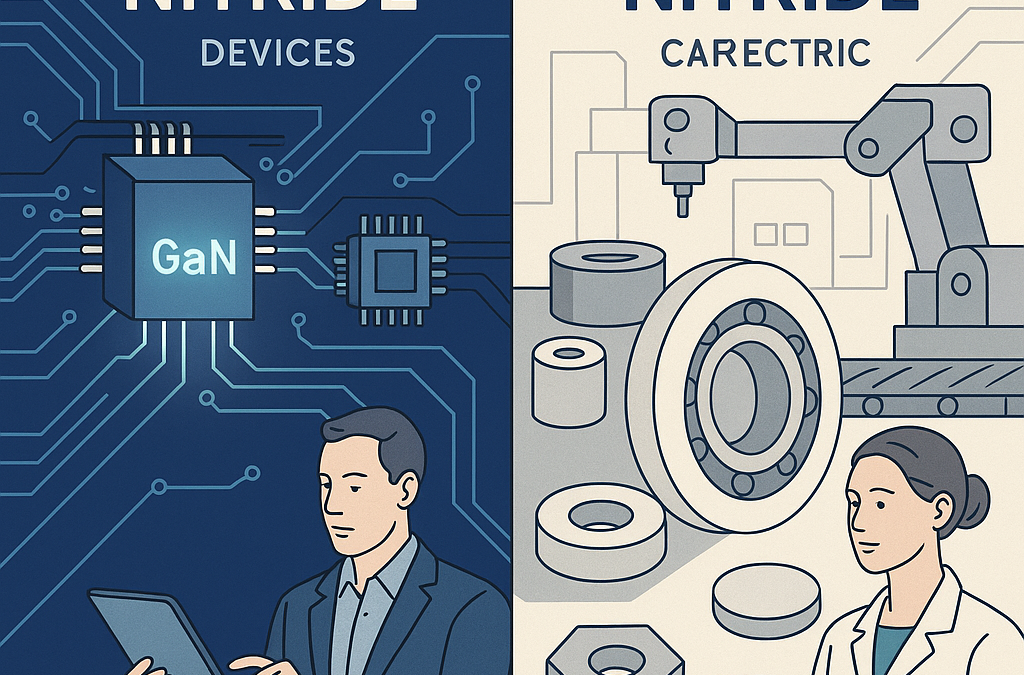
Silicon nitride (Si₃N₄) is a hard, electrically insulating ceramic compound used as a dielectric and structural material in electronics and manufacturing; gallium nitride (GaN) is a wide-bandgap semiconductor used to build power transistors and RF devices. They share...

by Andy Calloway | Aug 2, 2026 | Blog, GaN - Gallium Nitride
Silicon carbide (SiC) is a wide-bandgap compound semiconductor with a bandgap around 3.3 eV — nearly three times silicon’s 1.1 eV — that lets SiC devices handle higher voltages, higher temperatures, and higher switching frequencies than silicon, which is why it...

by Andy Calloway | Aug 2, 2026 | Blog, GaN - Gallium Nitride
Gallium arsenide (GaAs) is a compound semiconductor with a direct bandgap of around 1.4 eV and notably higher electron mobility than silicon, which makes it the material of choice for high-frequency RF, microwave, and photonic applications — smartphones’ RF...

by Andy Calloway | Aug 2, 2026 | Blog, GaN - Gallium Nitride
GaN outperforms silicon on switching frequency, power density, and efficiency at a given size, while silicon remains cheaper and better understood for lower-performance, cost-sensitive applications — which is why “GaN vs silicon” content converts so well:...

by Andy Calloway | Aug 2, 2026 | Blog, GaN - Gallium Nitride
A materials definition page answers “what is GaN.” An applications page answers “what can I actually build with it” — and that second question, asked by someone much closer to a real design or purchasing decision, deserves its own content built...
by Andy Calloway | Aug 2, 2026 | Blog, GaN - Gallium Nitride
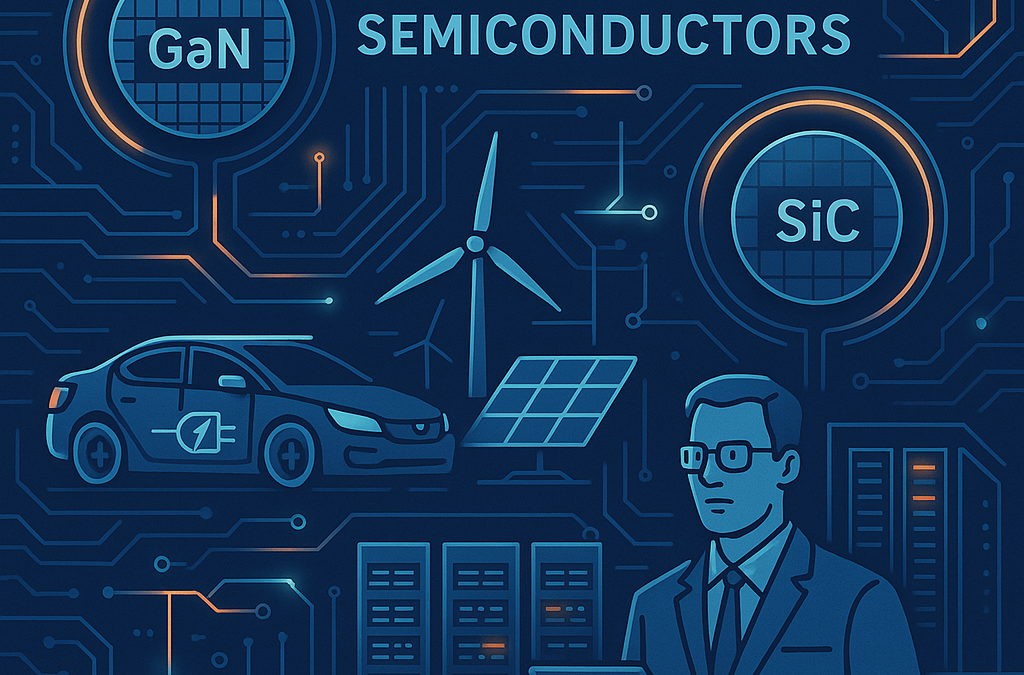
Wide bandgap semiconductors are materials — chiefly gallium nitride and silicon carbide — with a bandgap significantly larger than silicon’s, giving them higher breakdown voltage, faster switching, and better high-temperature performance. As a content topic,...